- Admissions
- Academics
- Research Office
- Student Life
- News & Events
- Outreach
- About

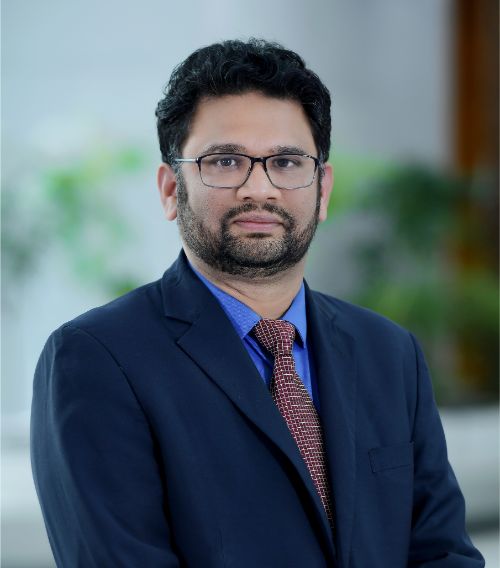
Professor Ahsan Habib Khandoker is Professor of Biomedical Engineering at Khalifa University of Science and Technology, Abu Dhabi, where he directs the Healthcare Engineering Innovation Group (HEIG). His multidisciplinary research applies biosignal processing, bioinstrumentation, nonlinear modelling, and artificial intelligence to a range of clinical problems, including sleep apnea and sleep-disordered breathing, autonomic dysfunction in cardiovascular disease, diabetic autonomic neuropathy, fetal cardiology, and mental health — spanning depression, emotion recognition, and brain–heart coupling. Ideas originating in his work have informed biosignal-processing platforms developed by companies including ResMed (Sydney), Compumedics (Melbourne), and Atom Medical (Tokyo), with whom he has served as a research consultant. In 2024 he founded the Abu Dhabi start-up Vital Rhythms LLC.
A Senior Member of the IEEE, Professor Khandoker holds a Doctor of Engineering (Biomedical) from the Muroran Institute of Technology, Japan. He subsequently undertook postdoctoral research at the University of Melbourne (2005–2011), where he advanced from Research Fellow to Senior Research Fellow in the Department of Electrical and Electronic Engineering before joining Khalifa University. He remains a Visiting Fellow at the University of Melbourne, is an Adjunct Professor at RMIT University, and was for over a decade Adjunct Faculty at the Graduate School of Medicine, Tohoku University. His collaborative research network extends across institutions in Korea (KAIST), Japan, Australia, Europe, and the USA, and his work has been recognised by awards including the Khalifa University Innovation Award (2020), the Abu Dhabi Education Council Award for Research Excellence (2016–2017), the Challenge 22 Innovation Award (2015, one of six winners from 330 projects), and a Grand Challenges Explorations grant from the Bill & Melinda Gates Foundation (2012). His research has been supported by funders including the Bill & Melinda Gates Foundation, the Australian Research Council, the Abu Dhabi Education Council, and Khalifa University internal grants, with clinical collaborations including Cleveland Clinic Abu Dhabi.
Across nearly three decades of teaching since 1996 — in Bangladesh, Malaysia, Japan, Australia, and the UAE — Professor Khandoker has developed and coordinated six bioelectronics and biosignals courses and contributed to teaching in nine others at undergraduate and graduate levels. He emphasises student-centred, assessment-driven learning that builds analytical and critical thinking, and has supervised a large cohort of PhD and Master's students, many of whom now hold academic posts internationally.
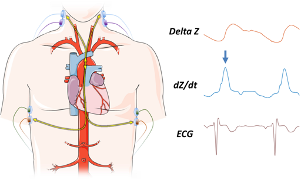
NOMAD study: Non-invasive Monitoring using Artificial-Intelligence during Dialysis (Funded by CIRA 2022-2025 in collaboration with SEHA Kidney Center Abu Dhabi). PI: Ahsan Khandoker
Hemodialysis (HD) treatment saves the lives of patients with kidney failure, but the procedure is inherently unphysiological and has risks including infection and cardiovascular instability which are associated with morbidity and mortality. Currently, HD requires frequent blood pressure monitoring but requires expert nursing and physician resources to ensure safety. The aim of this project is to use advances in noninvasive wearable technology and explainable AI to devise new algorithms to predict cardiovascular instability or detect infection so that the dialysis treatment can be modified automatically in real-time to treat such problems before they become critical. The partner SEHA Kidney Care will facilitate the clinical implementation of the proposed new technology. Ultimately this can be incorporated into existing dialysis systems with clear potential for commercialization. The outcomes of this project would make fundamental as well as translational research outputs for hemodialysis monitoring and has the potential to improve patient safety.
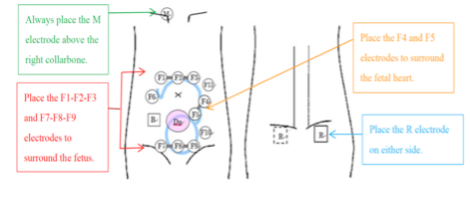
Developing a new integrated abdominal Electrography system for noninvasively detecting fetal brain signals (Funded by CIRA 2019-023 in collaboration with Tohoku University Sendai, Japan). PI: Ahsan Khandoker
Fetal brain damage is a common contributing cause of preventable death and adverse neurological outcome (e.g. cerebral palsy) worldwide. At present, there is no device (invasive or non-invasive) in the market to measure fetal brain electrical activity. In this project, we, therefore, will first examine the patterns of fetal brain waves in a pregnant animal model (mice) and then investigate a new method for non-invasive measurement of human fetal brain development (32 weeks gestation till birth) by abdominal surface electrical signal with inexpensive gel electrodes, comparing with fetal fMRI images of the fetal brain and direct lead scalp electroencephagram during labor. The industry partner’s cash contributions for three years can ultimately be incorporated into their existing monitoring device with clear potential for commercialization. The outcomes of this project would make fundamental as well as translational research outputs for fetal neurological screening and its potential to reduce fetal deaths.
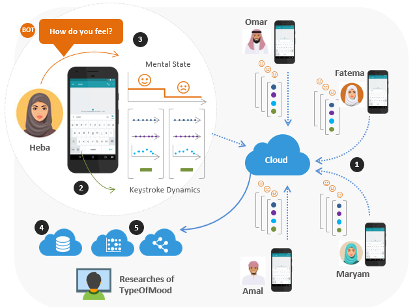
MindMyHeart: Personalized smart management test bed for Cardiovascular and Mental Diseases via Technology-enabled Physiological and Behavioral changes (Funded by KU-KAIST Joint Research Center 2019-2022). PI: Ahsan Khandoker
Cardiovascular disease (CVD) is the major cause of death in the UAE/Korea, causing one in every five deaths. Some lifestyle factors (such as an unhealthy diet, lack of exercise, and smoking), known to contribute to a higher risk of CVD, are also common in people with mental health issues (such as depression). Integrated Cardiac and Mental Rehabilitation can significantly improve mortality and morbidity rates, leading to longer independent living and reduced use of healthcare resources. The proposed collaborative project, namely MindMyHeart, sets an overall goal to introduce a personalized home-based rehabilitation program, enabling lifestyle behavioral change towards the increased quality of life with personalized management for CVD and mental health issues. The overall concept of the MindMyHeart platform is easily transferable to address other diseases providing market opportunities for commercialization. MindMyHeart will be realized in collaboration with the KAIST, Korean Hospitals, and Cleveland Clinic Abu Dhabi through research visits.
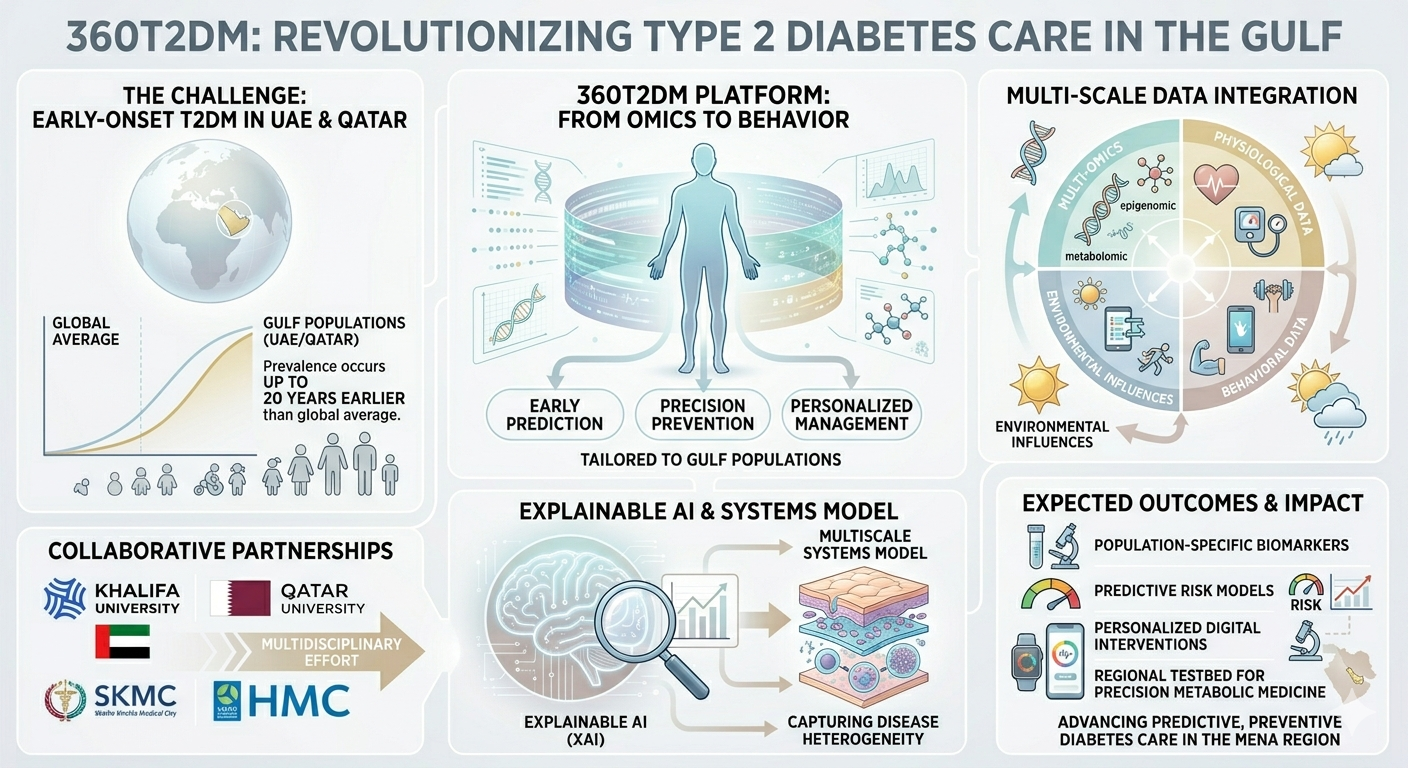
360T2DM: Omics-to-Behavior Novel AI-based Platform for Type 2 Diabetes Prevention and Personalized Care in the UAE and Qatar (Funded by KU-QU Joint Research Center 2026-2027). PI: Ahsan Khandoker
Type 2 Diabetes Mellitus (T2DM) is a major cause of morbidity and mortality worldwide, with an exceptionally high and early-onset prevalence in the UAE and Qatar—occurring up to 20 years earlier than the global average. The 360T2DM project aims to create an AI-driven, omics-to-behavior platform for early prediction, precision prevention, and personalized management of T2DM tailored to Gulf populations. Integrating multi-omics (genomic, epigenomic and metabolomic), physiological, and behavioral data through explainable AI, the project will generate a multiscale systems model capturing disease heterogeneity and environmental influences. This multidisciplinary effort by Khalifa University, Qatar University, and clinical partners (SKMC and HMC) will proceed through iterative data harmonization, AI model development, and pilot clinical validation. Expected outcomes include population-specific biomarkers, predictive risk models, and personalized digital interventions, establishing a regional testbed for precision metabolic medicine and advancing predictive, preventive diabetes care in the MENA region.
https://orcid.org/0000-0002-0636-1646
https://loop.frontiersin.org/people/75268/overview
https://www.researchgate.net/profile/Ahsan-Khandoker
Three Research position [Postdoctoral fellows, Research Associate and Research Assistant] are available for three projects funded by Khalifa University Abu Dhabi. The expertise I am looking for are Biosignal processing, image processing, Machine learning, statistical modelling, physiological interpretation with application to cardiovascular diseases, mental health, fetal wellbeing etc. If you could find any suitable candidate who is interested to work in Abu Dhabi, please contact me asap with CV.