
- Admissions
- Academics
- Research Office
- Student Life
- News & Events
- Outreach
- About

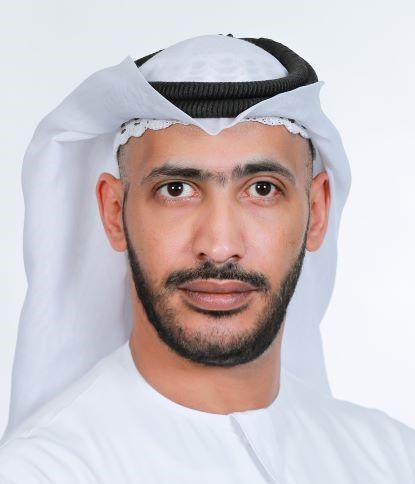
Dr. Mohammed Abou Khousa (Senior Member, IEEE) is currently a Professor in the Electrical Engineering Department and Associate Dean of Graduate Studies in the College of Engineering and Physical Sciences. His areas of expertise include antennas, radar systems, RF instrumentation, material characterization, nondestructive testing, and subsurface imaging. Before joining Khalifa University, he was a Research Scientist at Robarts Research Institute, Canada. He has more than two decades of research and development experience advancing sensing technologies that "see the unseen" through the scattering, absorption, reflection, and interaction of electromagnetic waves with material structures.
Over the course of his career, Dr. Mohammed led and contributed to many research and development projects within a broad range of sectors, including oil & gas, biomedical, space, and aerospace. He has co-authored many technical publications and holds several patents in his areas of expertise. His active role in knowledge and technology transfer between academia and industry has led to the deployment of microwave sensing technologies worldwide. He is the recipient of multiple national and international awards, including the IEEE Instrumentation and Measurement Society 2017 Outstanding Young Engineer Award. As a coauthor, he received the IEEE Antennas and Propagation Society 2013 Harold A. Wheeler Applications Prize Paper Award. He currently serves as Associate Editor-in-Chief of the IEEE Transactions on Instrumentation and Measurement (TIM), having previously served as Associate Editor (2017–2021). He was TPC Co-Chair for I2MTC in 2023, 2024, and 2025, and served as Chair of the IEEE UAE IMS/AP/MTT Joint Chapter (2018–2021). He is an IEEE IMS Distinguished Lecturer for the 2026–2028 term.

Electromagnetic Sensors & Measurement Systems
The group has an active thrust on the development of RF/microwave/millimeter wave sensors and measurement systems for various applications. For instance, a first-of-its-kind microwave-based real-time flow monitoring device was developed to detect and quantify the presence contaminants/debris in natural gas networks. The device is certified for Zone 0 hazardous environment deployments and it was piloted successfully in the field.

Synthetic Aperture Radar (SAR) Imaging
The group is working on the realization of SAR systems to enable remote sensing applications such as mapping, disaster monitoring and weather prediction from small platforms (e.g., CubeSats) in Low Earth Orbit (LEO). Innovative enabling technology is explored by the group to realize the antenna, transceiver, and the SAR processor.

Microwave & Millimeter Wave Nondestructive Testing & Evaluation (NDT&E)
Integrity assessment of material structures requires inspection tools capable of detecting and evaluating defects reliably. To this end, the group is actively involved in the development and qualification of novel microwave and millimeter wave based NDT&E systems & techniques to address critical inspection needs in various sectors including manufacturing, oil & gas, space and aerospace.

Antennas and Reconfigurable Surfaces for Combined Communication and Sensing
Antennas are the first elements in the radio frequency (RF) front-ends in wireless communication systems, radars as well as positioning modules. Future antennas are expected to play multiple roles or be embedded into multi-function structures. To this end, the group focuses on the development of novel antennas and reconfigurable surfaces for next generation networks as well as for critical space missions.