



Researchers Explore Perception, Cognition, Intelligence, and Emerging Brain Technologies
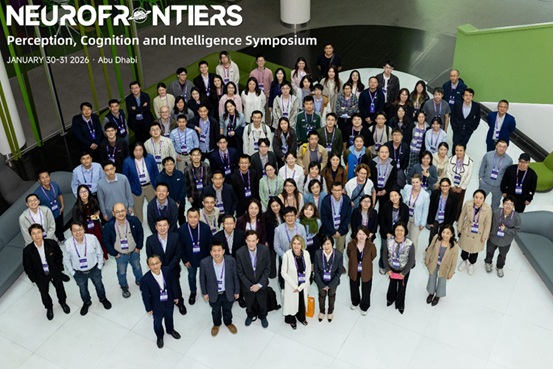
More than 200 distinguished scholars and outstanding students in neuroscience gathered at the Khalifa University Main Campus for the NeuroFrontiers: Perception, Cognition and Intelligence Symposium, a high-level international forum jointly organized by Khalifa University’s College of Medicine and Health Sciences (CMHS), and the IDG/McGovern Institute for Brain Research at Tsinghua University.
Researchers from institutions across China, US, and Middle East examined how advances in neuroscience are reshaping understanding of perception, cognition, intelligence, and brain disorders, while opening new pathways through emerging technologies such as artificial intelligence, brain–computer interfaces (BCI), neuromodulation, and computational modeling.
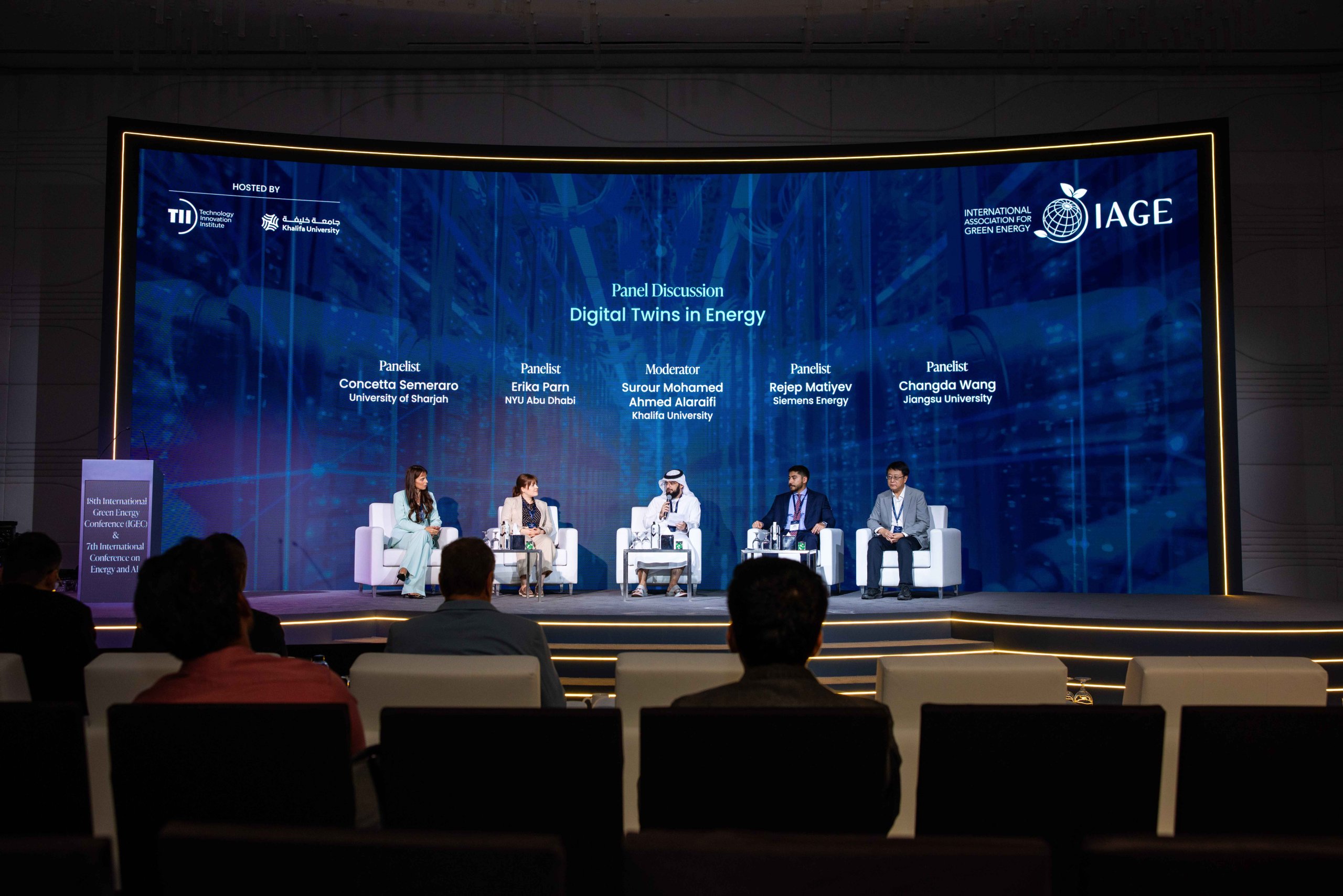
Across the scientific program, 22 speakers presented cutting-edge research spanning five thematic areas, covering brain and cognition, intelligence, brain development and disorders, and new technologies and applications. Interdisciplinary dialogue was further deepened through three panel discussions focused on the integration of psychology and neuroscience in understanding human behavior, the convergence of biological intelligence and artificial intelligence, and advances in brain modulation and BCI technologies.
A total of 78 posters were presented, generating sustained discussion and cross-disciplinary exchange, and reinforcing the symposium’s role as a catalyst for future international collaboration.
Engagement from Khalifa University included Professor Bayan Sharif, Provost, with panel contributions from Dr. Yahya Zweiri, Senior Director, ARIC and RIC2D, and Professor Merouane Debbah, Director, 6G Research Center; as well as Dr. Hongwei Wang, Vice-President, Tsinghua University; and Dr. Bin Yang, Chairperson of the Board of Trustees, IDG/McGovern Institute for Brain Research, Tsinghua University. Dr. Lore McGovern, Co-founder, McGovern Institute for Brain Research, and Dr. Hugo Shong, Founding Chairman, IDG Capital, highlighted the importance of sustained investment and international cooperation in advancing brain science.
Three speakers from CMHS included Biomedical Engineering & Biotechnology Department Acting Chair Professor Mohammed Segheir, Dr. Sung Mun Lee, Associate Chair, Undergraduate Studies, and Professor Andreas Bender, Medical Sciences. Distinguished academic leaders from leading global institutions contributed to the symposium, including Dr. Robert Desimone, Director, McGovern Institute, MIT; Dr. Fang Fang, IDG/McGovern Institute, Peking University; Dr. Xiaoqun Wang, Director, IDG/McGovern Institute, Beijing Normal University; and Dr. Song-Hai Shi, Director, IDG/McGovern Institute, Tsinghua University.
The symposium also emphasized early-career research through five themed poster exhibition areas, covering memory and learning, neural circuits and behavior, cellular and molecular neuroscience, disease and clinical research, and computational methods.
Professor Song-Hai Shi, Director, IDG/McGovern Institute for Brain Research, Tsinghua University, said: “This is a high-level international symposium on perception, cognition and intelligence, bringing together outstanding professors, postdocs, and students from five world-class universities to share their latest research progresses, discuss new frontiers and directions, and establish exciting collaborations. It is a wonderful experience to co-organize the symposium together with College of Medicine and Health Sciences at Khalifa University.”
Professor Bayan Sharif, Provost, Khalifa University, said: “Discussions at the NeuroFrontiers: Perception, Cognition and Intelligence Symposium examined how insights from the brain can inform the next generation of intelligent systems and therapeutic interventions. Khalifa University is delighted to bring together senior leaders, established researchers, and emerging scholars in partnership with Tsinghua University and the IDG Capital. The Symposium not only highlighted Khalifa University’s growing role in advancing collaborative, internationally connected brain research, but positioned Abu Dhabi as a convening hub for global neuroscience dialogue.”
Alisha Roy
Science Writer