



Chapter Lays Out Transformative Strategies to Shift Global Systems and Address Unsustainable Production and Consumption Patterns
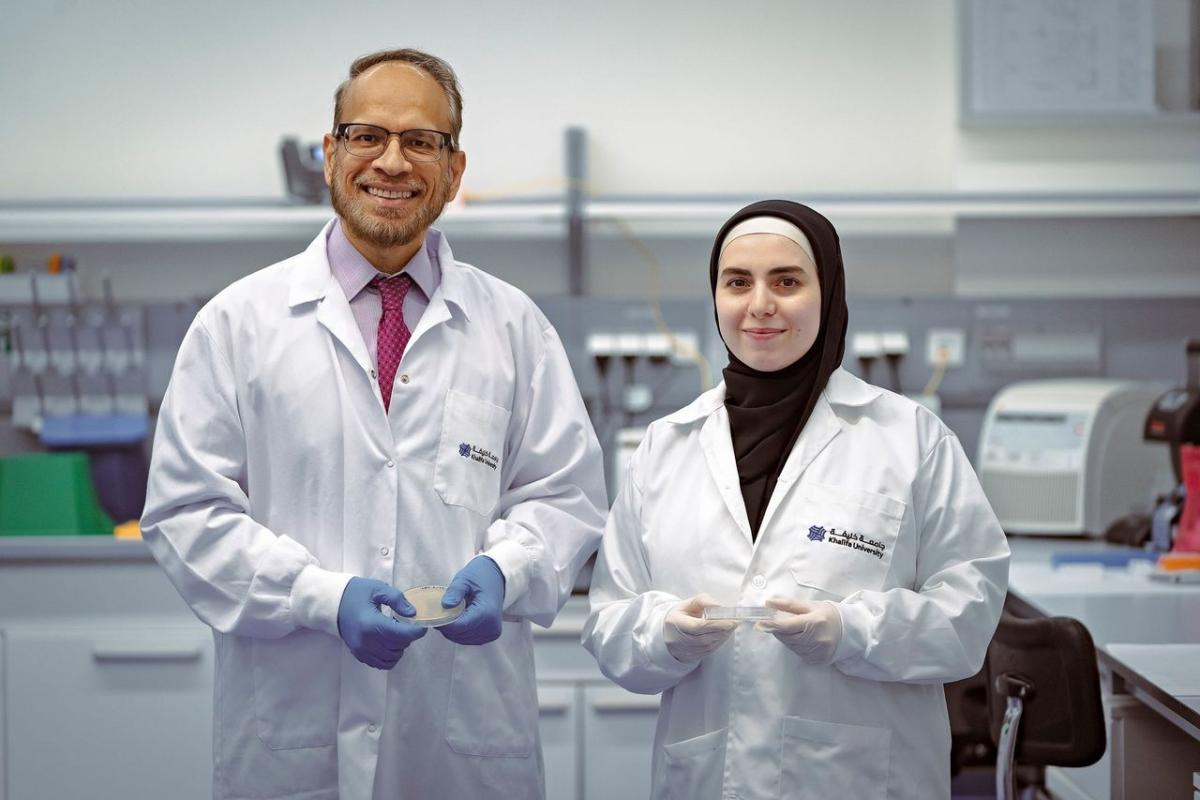
Khalifa University faculty Dr. Adolf Acquaye, Associate Professor, Department of Management Science and Engineering, and a member of The Research and Innovation Center on CO2 and Hydrogen (RICH), has been commended for his role as the lead author of a chapter in the seventh edition of the United Nations Environment Program’s (UNEP) flagship report, ‘Global Environment Outlook 7 (GEO-7): A Future We Choose’.
In an official letter of appreciation, Dr. Maarten Kappelle, Acting Head of the GEO-7 Secretariat and Chief of Service, Office of Science at UNEP, acknowledged Dr. Acquaye for his ‘invaluable contribution’ and confirmed that Member States officially acknowledged GEO-7 during the Seventh United Nations Environment Assembly (UNEA-7).
Dr. Acquaye served as a lead author for a chapter on ‘Solution Pathways enabling a Sustainable and Resilient Environment for Systems Transformation’. This critical chapter lays out transformative strategies to shift global systems and address unsustainable production and consumption patterns toward sustainability and resilience.
Launched on 9 December 2025 during the seventh session of the United Nations Environment Assembly (UNEA-7), GEO-7 is described as the most comprehensive scientific assessment of the global environment ever undertaken. Produced by multidisciplinary experts from around the world, the report assesses the interconnected crises of climate change, biodiversity loss, land degradation, desertification, and pollution and waste, which are already costing the global economy trillions of dollars annually.
GEO-7 is already making an impact across the globe, receiving widespread recognition for its urgent and solution-driven approach. It deepens the assessment of how global environmental crises are interconnected and must be addressed together, emphasizing actionable solutions and transformative pathways for governments and decision-makers. The report introduces new modelling results that compare ‘business-as-usual’ scenarios with transformative pathways, helping policymakers design coherent strategies for a sustainable and just future. It points out that transformative change is not only possible but necessary.
Dr. Acquaye said: “This report sends a powerful message to governments, industries, and communities alike: the time to act is now, and the solutions are within reach. I am honored to have contributed to a work of this scale and importance, representing Khalifa University, a globally recognized institution in the UAE and the GCC region that continues to support research bridging science and policy for a resilient planet.”.
Clarence Michael
English Editor – Specialist