



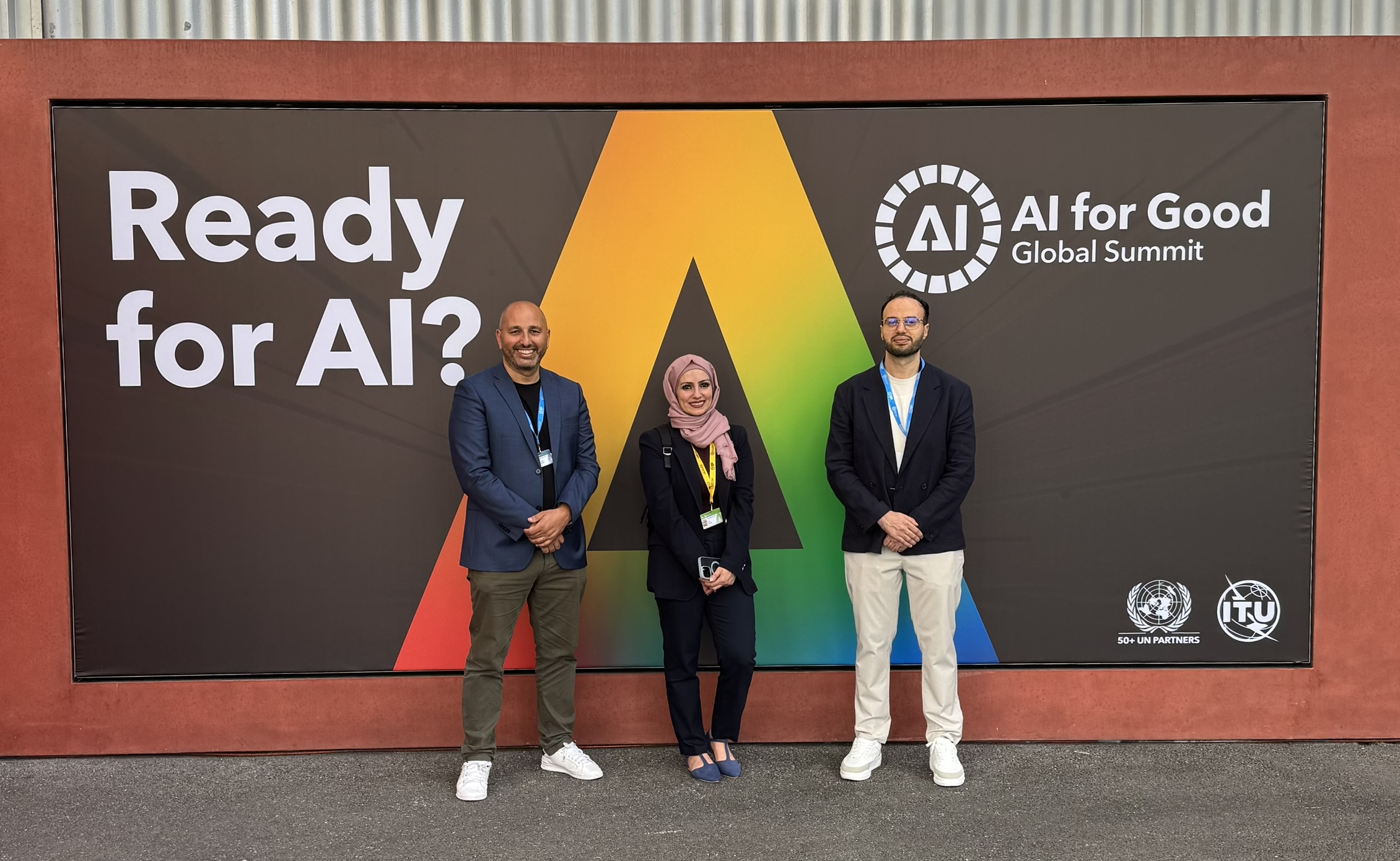
TelecomGPT-Arabic Demonstrated at Khalifa University Booth as Professor Mérouane Debbah Explores Future of AI-Native Communication Networks
Khalifa University showcased its latest UAE-developed artificial intelligence research and next-generation telecommunications innovations at the AI for Good Global Summit 2026, the United Nations’ leading platform on artificial intelligence, in Geneva. Organized by the International Telecommunication Union (ITU) in partnership with more than 50 UN agencies, the Summit co-convened with the Government of Switzerland.
His Excellency Dr. Mohamed Al Kuwaiti, Head of Cyber Security for the UAE Government met with the research team at the Khalifa University booth to discuss the University’s research projects and their potential to support national innovation, cybersecurity and digital transformation initiatives.
Representing Khalifa University were Professor Mérouane Debbah, Founding Senior Director, Digital Future Institute, Dr. Lina Bariah, Research Scientist, Computer and Information Engineering, and Dr. Brahim Mefgouda, Postdoctoral Fellow, Computer and Information Engineering. Through keynote presentations and panel discussions, the team highlighted the University’s growing contributions to responsible artificial intelligence, advanced communications technologies and international research collaboration.
Professor Debbah explored the future of AI-native communication networks during the summit’s fourth Machine Learning in Communication Networks (MLComm) Workshop, where his presentation, ‘From Language Intelligence to Environmental Intelligence: The Rise of Large Perceptive Models,’ examined how emerging AI systems are evolving beyond language understanding toward perceiving and interpreting complex real-world environments to enable intelligent, autonomous communication networks.
Dr. Lina Bariah joined an expert panel on ‘From AI Security to AI Access: Rethinking Connectivity in the Age of Agentic AI,’ contributing to discussions on how secure, reliable and equitable connectivity can help ensure children benefit safely from emerging AI technologies. The panel also examined the importance of addressing AI safety, ethics, bias and digital infrastructure as access to AI continues to expand.
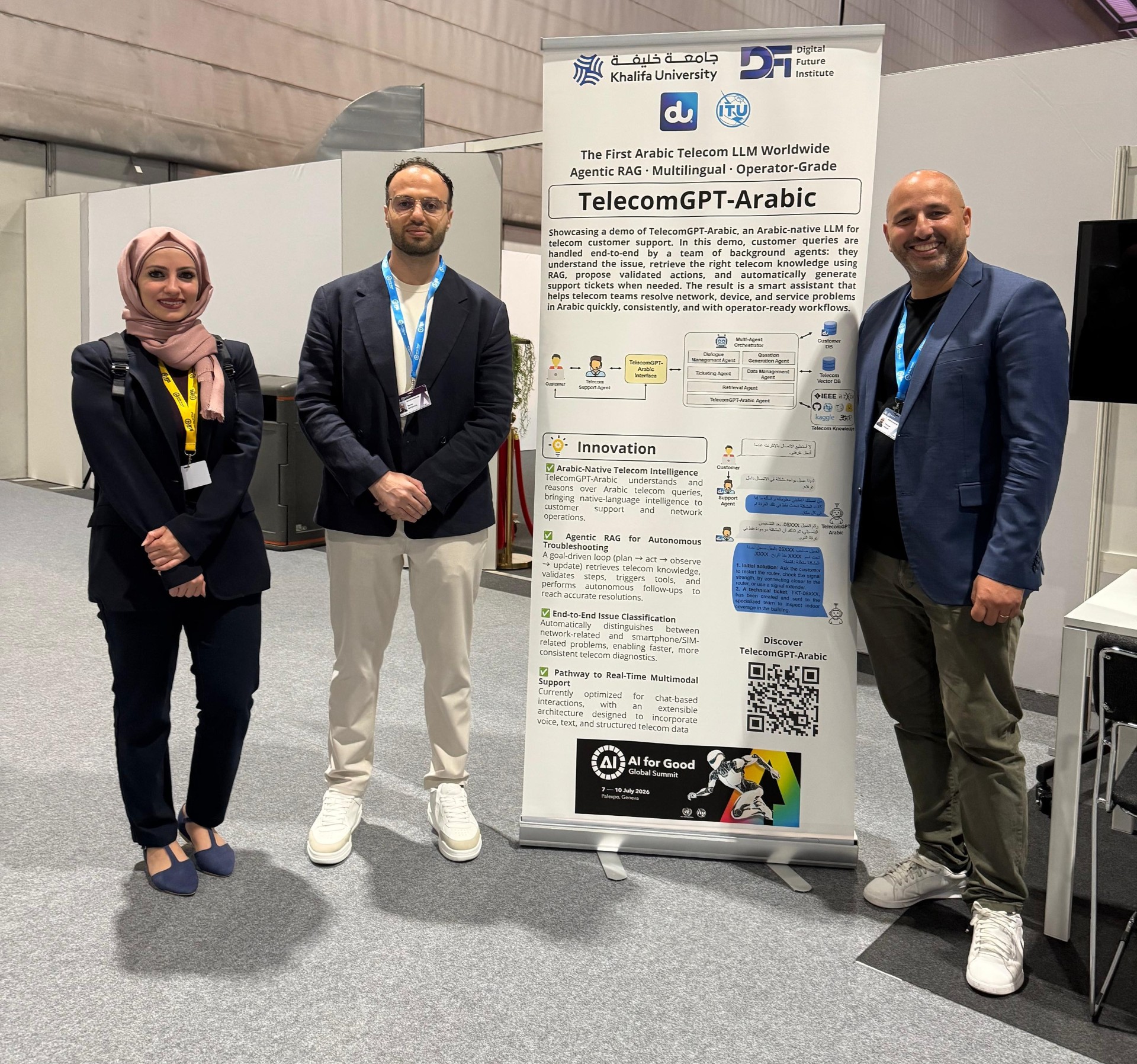
At the Khalifa University exhibition booth, the team showcased TelecomGPT-Arabic, the collaborative initiative developed by Khalifa University, du and the ITU to advance Arabic-language artificial intelligence for the telecommunications sector. The demonstration formed part of the University’s broader portfolio of AI research supporting next-generation communications technologies, digital transformation and intelligent network operations.
During Professor Debbah’s presentation, titled ‘From Language Intelligence to Environmental Intelligence: The Rise of Large Perceptive Models,’ he explored how emerging artificial intelligence systems are evolving beyond language understanding toward interpreting complex real-world environments, supporting the development of intelligent, autonomous communication networks. The workshop examined advances in agentic AI, large wireless models, digital twins, code generation and AI-native network architectures that are expected to shape the future of 6G communications.
The exhibition also featured discussions with international researchers, industry leaders, policymakers and technology organizations on opportunities for collaboration in artificial intelligence, telecommunications and digital infrastructure, reinforcing Khalifa University’s growing role in advancing AI innovation on the global stage.
Professor Mérouane Debbah said: “AI for Good brings together researchers, industry leaders, policymakers and international organizations to explore how artificial intelligence can address some of society’s most important challenges. It provided an excellent platform to showcase the innovative work taking place at Khalifa University, strengthen international collaborations and demonstrate how research developed in the UAE is contributing to the future of intelligent communications, responsible AI and digital transformation.”
Alisha Roy
Science Writer