



Award-Winning Research Identifies New Approaches to Slowing Ovarian Ageing, Improving Fertility-Related Cell Health
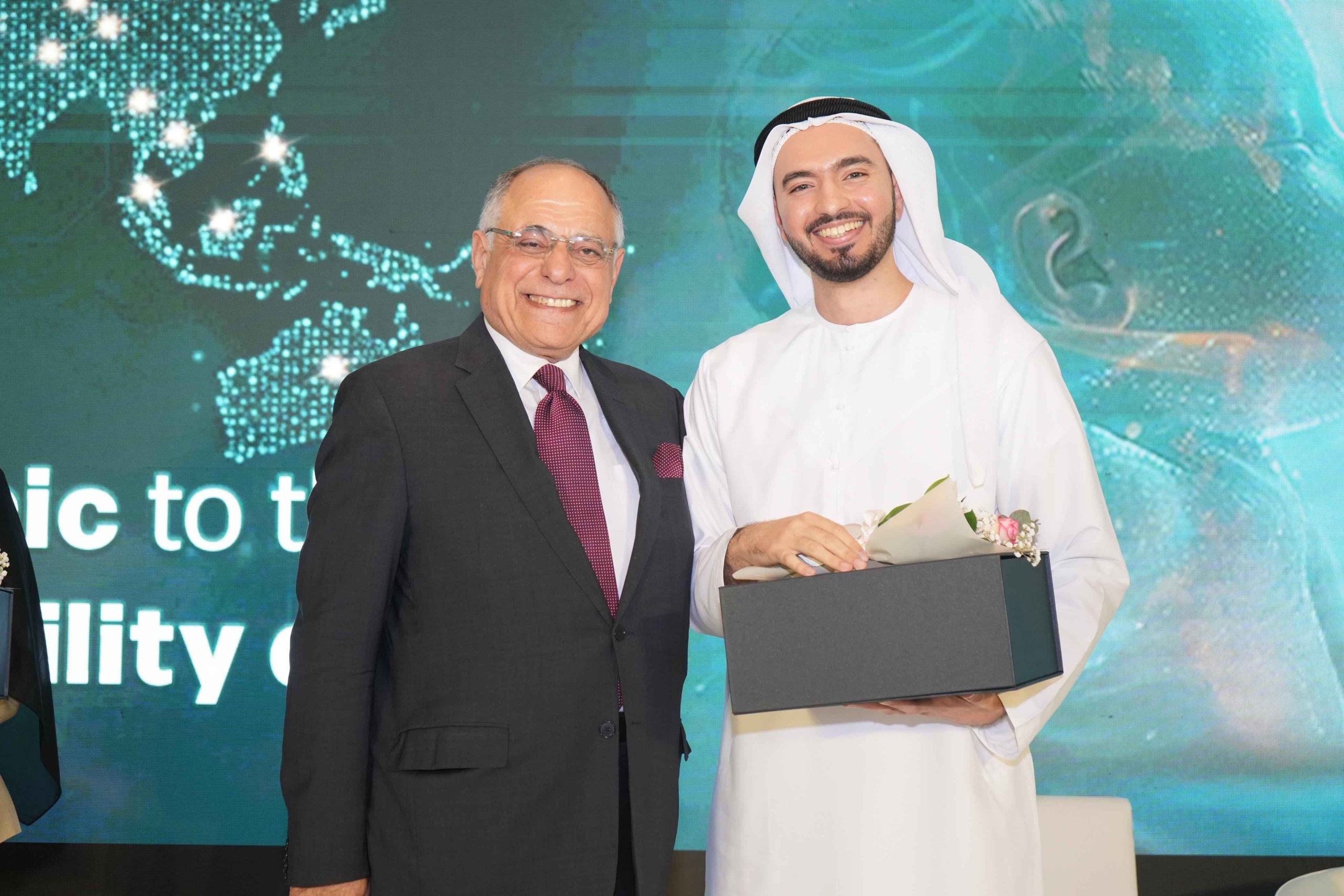
A Khalifa University Biomedical Sciences PhD student, Yassine El Mahi has won first place in a competitive international research presentation at the FertiClinic International Conference, held as part of the second International FertiClinic Fertility and IVF Conference (2nd IFFIC) in Abu Dhabi.
El Mahi received the top award in the conference’s scientific research competition focused on impregnation and fertility technologies. The winning research stood out for identifying a new approach to slowing ovarian ageing and improving fertility-related cell health. The study, titled Human Umbilical Cord Mesenchymal Stem Cell–Derived Extracellular Vesicles Attenuate Oxidative Stress in an In Vitro Ovarian Aging Model, focuses on addressing natural ovarian aging, a degenerative process marked by a gradual decline in ovarian function that can lead to infertility, broader health complications, and psychological burdens.
The two-day conference brought together global experts, healthcare leaders, and decision-makers for scientific dialogue, panel discussions, and hands-on educational sessions. The competition drew strong participation from physicians and university students across the UAE, including Khalifa University.
With rising life expectancy and social and economic shifts, ovarian ageing has become an increasingly significant challenge in fertility care. While hormone replacement therapy is commonly used to manage menopausal symptoms, it does not restore ovarian function and is associated with limitations and side effects, highlighting the need for alternative therapeutic approaches.
As part of his PhD research, El Mahi developed an in vitro ovarian aging model using human granulosa cells that mimics physiological aging. His early findings showed that treatment methods with biological factors derived from human umbilical cord ‘mesenchymal’ stem cells helped restore cell viability, reduce oxidative stress, and suppress cellular ageing and apoptosis, a natural, regulated process of cell death. These results point to the potential of stem cell free regenerative therapies as a minimally invasive strategy to support ovarian function and fertility.
The research is supervised by Khalifa University researchers and faculty from the College of Medicine and Health Sciences including Dr. Farzana Liakath Ali, Research Scientist, Medical Sciences, Dr. Mira Mousa, Assistant Professor, Public Health and Epidemiology, and Professor Ayman Al Hendy, Acting Chair and Professor of Medical Sciences, who also introduced the regenerative therapy approach, applied in this work, to Khalifa University’s research team.
Professor Ayman Al Hendy said: “This award-winning research led by Yassine El Mahi, contributes valuable evidence to the growing body of work on ovarian ageing and regenerative strategies. The research was conducted as part of Khalifa University’s Biomedical Sciences PhD program, reflecting the University’s ongoing focus on advancing evidence-based medical research. Its strength lies in combining biological insight with a cautious, non-invasive research approach. Advanced molecular and multi-omics analyses are being explored to further understand the biological mechanisms as the research progresses.”
Yassine El Mahi said: “This recognition is deeply meaningful to me as an early-career researcher. My work focuses on women’s health in the UAE, particularly on finding safer and more effective ways to address ovarian ageing. The work explores regenerative, stem-cell-free approaches that may offer new options for improving ovarian function. Presenting these findings in an international scientific forum remains an important step in refining the research and its future applications. The mentorship and research environment at Khalifa University, especially the guidance of my supervisors, continues to be essential in shaping this research and its future direction.”
Alisha Roy
Science Writer