



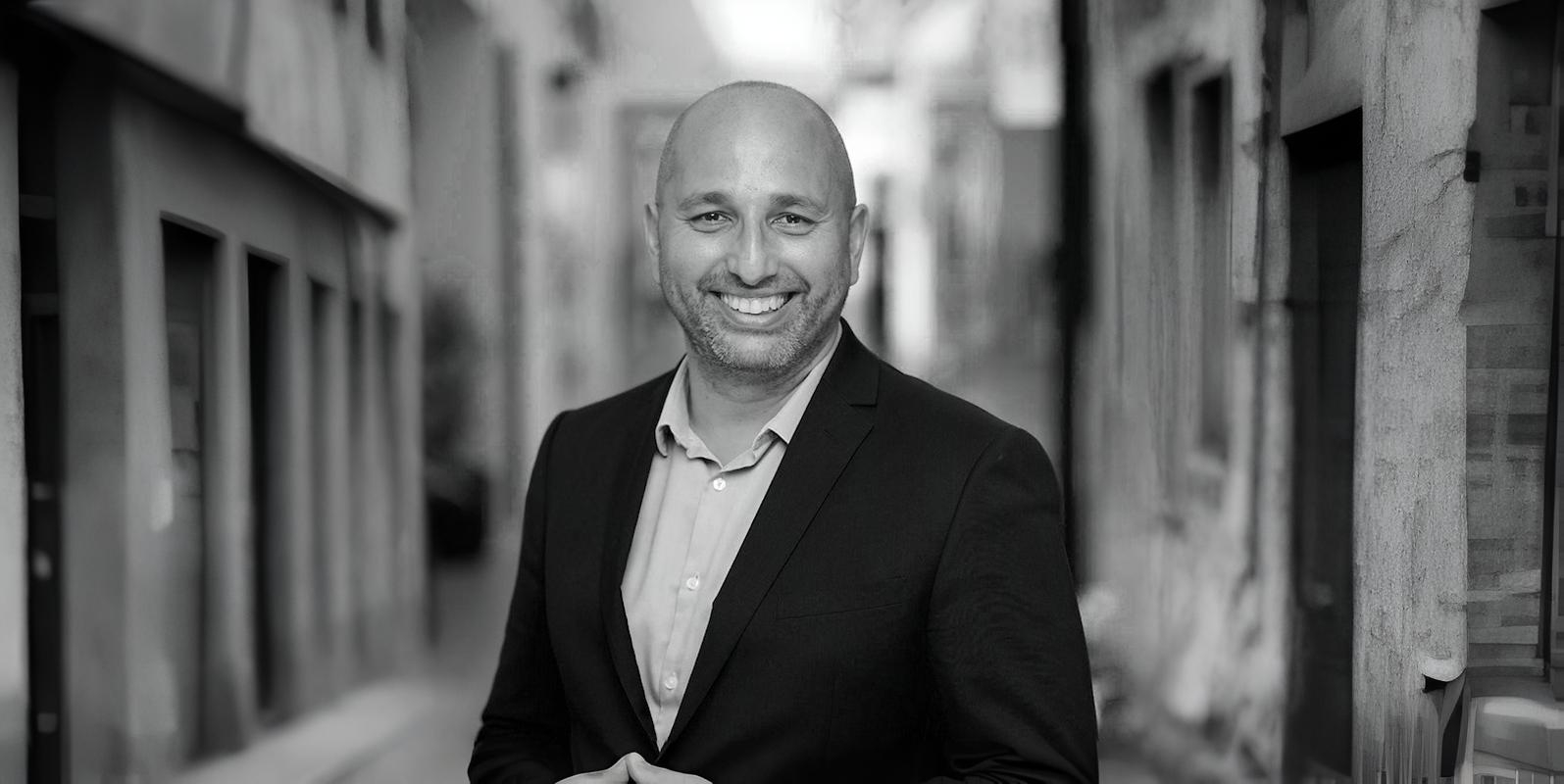
Merouane Debbah, Director, Khalifa University’s 6G Research Center, Professor, Computer and Information Engineering, and Ambassador for Khalifa University’s Digital Future strategy.
With over two decades of experience behind him, Professor Merouane Debbah remains at the forefront of wireless communications, mathematics and artificial intelligence. He has built top-tier teams at major industry leaders including Motorola, his first job after a PhD at École Normale Supérieure Paris-Saclay (2002), and Huawei. He joined Khalifa University in 2023 to establish the 6G Research Center, a new hub dedicated to shaping the future of wireless technology.
As an ambassador, I focus on bridging advanced research with the digital transformation goals of the UAE. I engage with stakeholders across academia, government and industry to align our efforts with these goals. I also promote awareness of how AI and 6G can be responsibly deployed to serve communities, industries and public services.
I have always been drawn to high-impact foundational problems, and 6G is a rare opportunity to redefine networks and the way intelligence and connectivity co-evolve. Leading the 6G initiative at Khalifa University allows me to channel theoretical work into strategic innovation with regional and global resonance.
Our research focuses on enabling ‘intelligent connectivity’ by grounding AI in reality, literally. We are exploring how AI systems, such as large language models (LLMs) and agents, can be integrated into wireless networks, making them self-aware and self-optimizing. We are also designing architectures that combine sensing, communication and computing; these are essential for immersive experiences and real-time virtual representations called digital twins. Our goal is to create faster networks that are also smarter, adaptive and more sustainable.
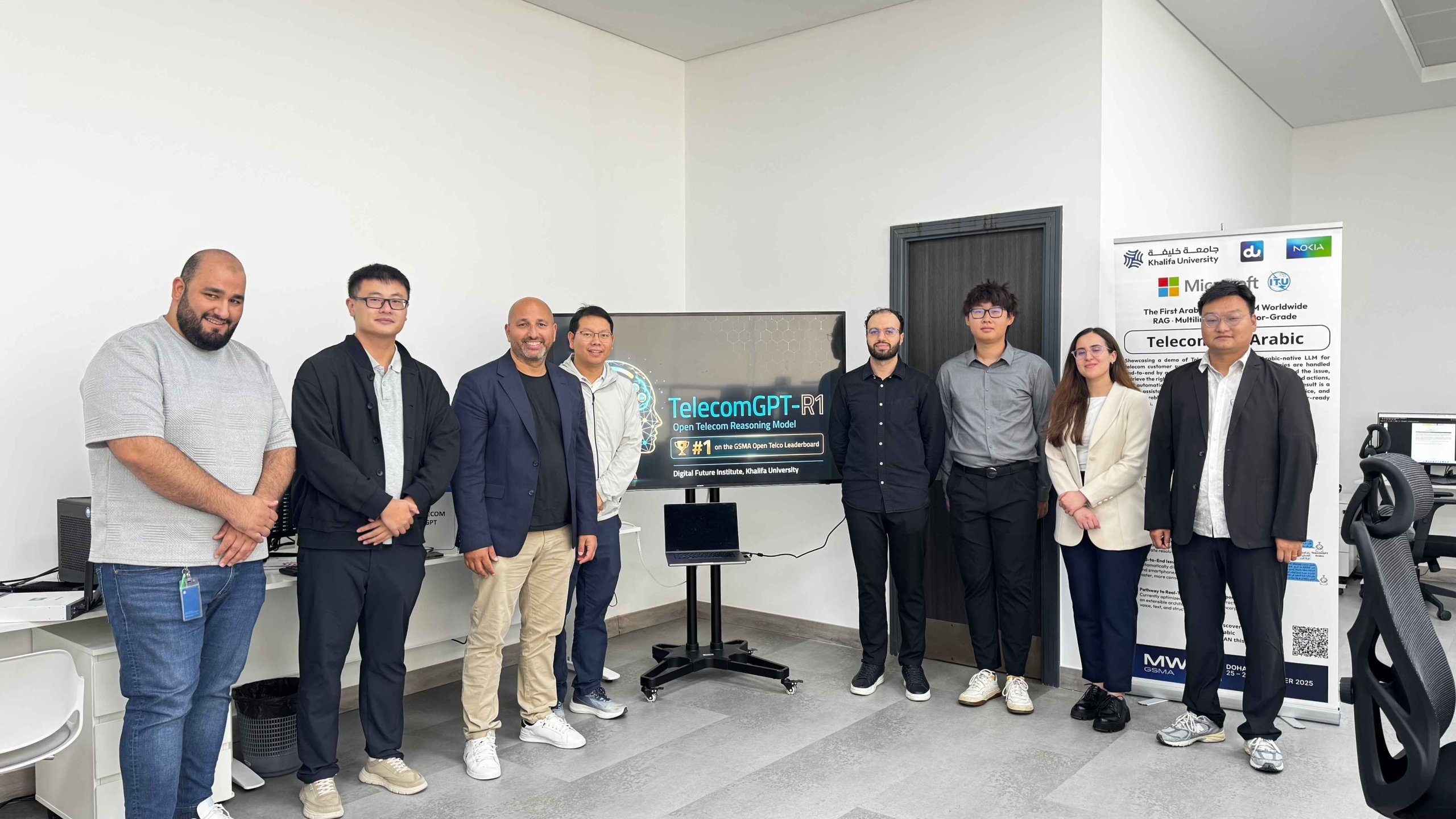
We are building intelligent systems that understand context, learn from historical patterns and act. In 2024, we introduced TelecomGPT, the first telecom-specific LLM. It allows telecom operators to optimize, diagnose and automate complex networks using natural language interfaces that facilitate human-computer interaction through voice or text. We have now launched TelecomGPT-Arabic to support regional models and broaden accessibility.
“Our research focuses on enabling ‘intelligent connectivity’ by grounding AI in reality, literally.” Merouane Debbah
Our most forward-looking endeavor addresses large perceptive models. The models go beyond text and integrate signals from various data types, real-time optimization, and user intent to drive automation. Imagine an environment where a user simply says, “optimize my home’s energy use while I am away,” and the system autonomously reconfigures connected devices, manages charging schedules and balances loads in real time.
Collaboration is crucial. We see ourselves as a scientific hub and a strategic integrator; working across academia, industry and policy to shape the future of intelligent networks. Partnerships amplify our impact and ensure that research outcomes translate to real-world systems that benefit operators and society.
We worked with the GSM Association, which represents mobile network operators worldwide, to initiate the first open benchmarking platform for telecom LLMs. The platform, which defines performance standards, is a key step toward responsible AI adoption.
Together with the regulator, the Telecommunications and Digital Government Regulatory Authority, we developed the UAE’s 6G Strategic Vision. We also contribute to IEEE [Institute of Electrical and Electronics Engineers] initiatives, including chairing the IEEE GenAINet [Large Generative AI Models in Telecom Emerging Technology] Initiative that drives generative AI integration into telecom architectures.
Soon, wireless networks will not just carry information: they will understand it, reason over it and act upon it. Our research is central to this shift. By grounding intelligence into the fabric of connectivity, we empower machines and people to work together more naturally, efficiently and sustainably.