



First Publication by Polar Research Center Captures for the First Time How Sea Ice and Snow Respond Differently to Extreme Temperature Spikes
Khalifa University researchers from the UAE Polar Research Center, hosted by the University, have published their first study, capturing how a rare storm raised temperatures in East Antarctica by 18 degrees in just 24 hours, a shift so rapid it is nearly unheard of in one of the coldest regions on Earth.
It was the Khalifa University team’s SIMBA (a Snow Ice Mass Balance Array) instrument, already deployed in the ice seven days before the storm struck, that recorded for the first time how sea ice and snow respond differently to an extreme temperature spike in East Antarctica.
The data showed that when temperatures spike, sea ice and the snow sitting on top of it do not behave the same way. As the storm passed, the ice held steady while the snow above it was stripped and reshaped within hours. That gap in how the two respond is what current climate models are not fully capturing when they calculate how fast Antarctica is losing ice and how high seas could rise.
The study was led by Dr. Diana Francis, Head of the Environmental and Geophysical Sciences (ENGEOS) Lab and Assistant Professor, Earth Sciences, Khalifa University, alongside researchers from the Australian Antarctic Division, the University of Tasmania, ETH Zurich, the University of Porto, and the Swiss Federal Institute for Forest, Snow and Landscape Research.
Established by the UAE government, the Polar Research Center was located at Khalifa University to position the country as an active contributor to global polar science at a time when both the Arctic and Antarctic regions are undergoing significant and rapid change.
Dr. Diana Francis said: “Antarctica may be the farthest point from the UAE, but what happens there affects all of us. What made this study possible was being there before the storm arrived. The SIMBA instrument was already in the ice and collecting data when that mass of warm air hit on 14 July. That kind of continuous, ground-level record is exactly what polar science has been missing for this part of Antarctica. Longer observations spanning at least a full year will be needed to capture the summer melt season and to build a more statistically complete picture of how extreme weather events shape Antarctic sea ice over time.”
The July storm was the only one of its kind during the entire five-month study period, making the timing of the SIMBA deployment (and the continuous data it was already collecting when the storm arrived) a significant factor in what the study was able to document.
SIMBA is a five-meter instrument equipped with hundreds of sensors that measures temperature, ice thickness, and snow depth continuously as ice forms around it. In July 2022, the Khalifa University team deployed the SIMBA onto fast ice approximately 1.8 kilometers off Mawson Station in East Antarctica, becoming the first scientists from any UAE institution to deploy operational instruments on the Antarctic continent. Seven days later, a rare mass of warm, moist air originating in the subtropics swept across the Southern Ocean and hit the coast. The instrument was already in the ice and measuring every hour.
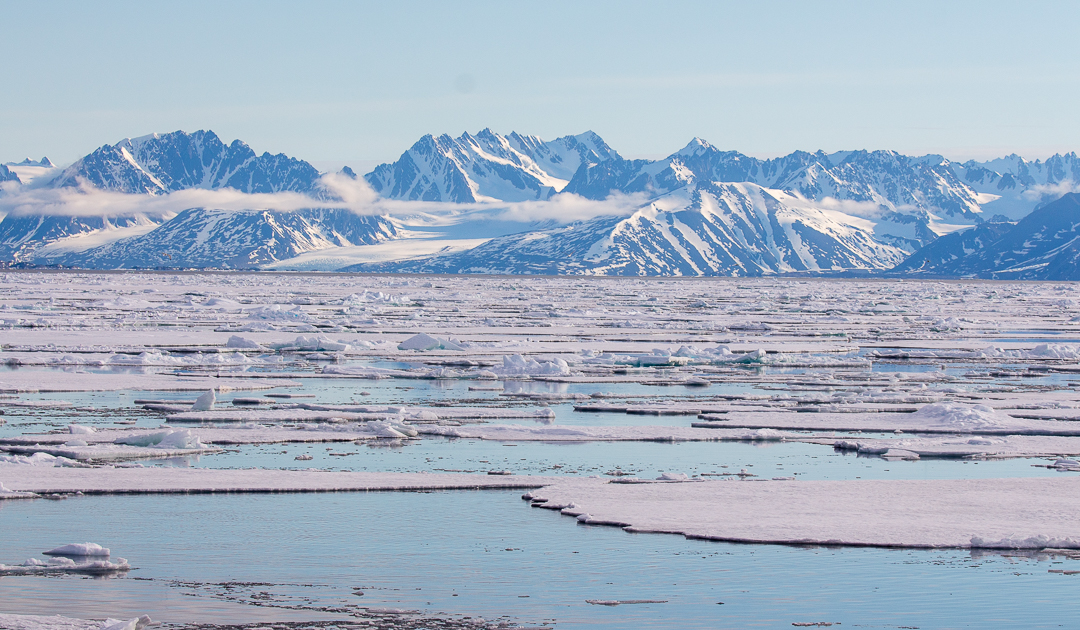
Governed by entirely different forces, sea ice followed a slow and predictable seasonal arc, thickening steadily from July and peaking at 1.16 meters in late October before melting to just six centimeters by the end of November. Snow depth was far more volatile, shifting by up to eight centimeters in a single day in response to storms, wind, and heat. When the July storm arrived, the snow layer was scoured away by winds exceeding 30 meters per second that prevented any accumulation at the site. The following day, warm dry air descending off the Antarctic Plateau erased much of what remained, however, the ice beneath registered almost no change.
The storm’s effects extended beyond the measurement site with deep low-pressure system driving it, pushing pack ice northward at more than 60km per day and opening a stretch of open water within the sea ice that persisted for eight days. High-resolution atmospheric modeling conducted as part of the study showed wind speeds exceeding 45 meters per second where the incoming warm air collided with cold winds draining off the Antarctic Plateau, producing precipitation rates above three millimeters per hour along the coast – among the highest recorded for the region.
Alisha Roy
Science Writer