



Simulation Study Evaluates Dispersion and Accumulation Dynamics Near Barakah Nuclear Facility in the UAE
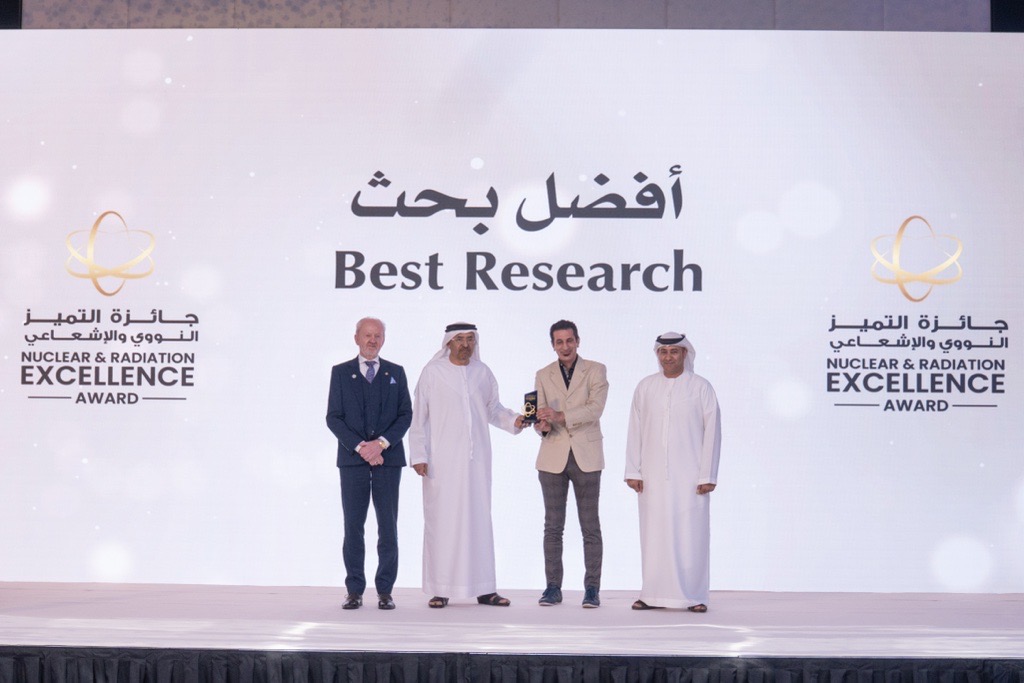
A study from the Emirates Nuclear Technology Center (ENTC) and Khalifa University’s Department of Mechanical and Nuclear Engineering has received the ‘Best Research’ Award from the Federal Authority for Nuclear Regulation (FANR), the UAE’s independent nuclear regulator, for examining the long-term dispersion of dissolved radioactive pollutants in the Arabian Gulf associated with the Barakah Nuclear Power Plant.
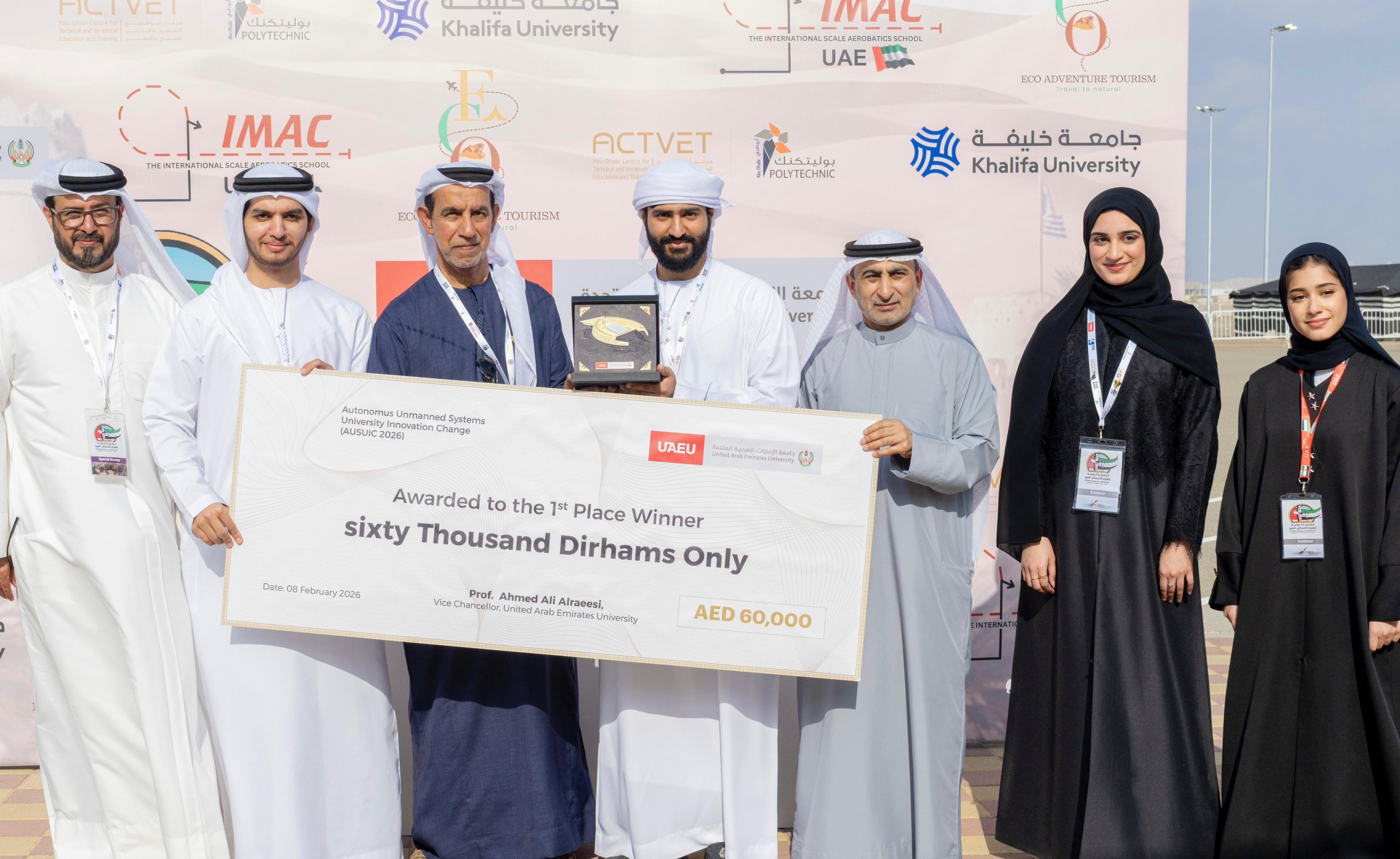
The award was presented at the inaugural Nuclear and Radiation Excellence Awards ceremony in Abu Dhabi, recognizing high-impact contributions advancing nuclear safety across the UAE, with a total of 90 submissions with The Best Research Award category focusing on advancement in nuclear safety, environmental protection, and evidence-based decision-making in the UAE’s peaceful nuclear sector.
The award-winning research titled ‘A Numerical Assessment of the Dispersion of Dissolved Pollutants in the Arabian Gulf Associated with the Barakah Nuclear Power Plant,’ is published in Ocean Modelling in 2023. The study is led by Dr. Yacine Addad, Deputy Director, Emirates Nuclear Technology Center, and includes Dr. Maryam Rashed AlShehhi, Assistant Professor, Civil & Environmental Engineering, Postdoctoral Fellow Oleksandr Nesterov, Research Scientist Dr. Rachid Abida, Mathematics, Dr. Sana Bilal, and Dr. Emmanuel Bosc from FANR, and Dr. Marouane Temimi, Stevens Institute of Technology, US.
Using a three-dimensional model of the Arabian Gulf, the researchers simulated dispersion patterns along the western UAE coastline, including the Barakah–Sir Bani Yas–Dalma–Yasat Islands corridor. The researchers assessed how long trace radioactive materials would move, disperse, and would remain in the Arabian Gulf waters, and which coastal areas could be affected; providing critical data to advance nuclear environmental safety and proactively support contingency preparedness in the UAE.
Over two years of the study, simulations showed that 60–70% of trace radionuclides – which may be present in cooling water effluent during routine plant operations, and in hypothetical emergency scenarios – would exit the Gulf through natural circulation. In simulated scenarios, plume movement followed the UAE coastline eastward toward the western approaches of the Strait of Hormuz, with partial flushing into the Sea of Oman and broader circulation across the Gulf.
Prof. Yacine Addad said: “We are honored to receive this recognition from FANR for this research, conducted through the Emirates Nuclear Technology Center, which strengthens the scientific foundation of environmental safety assessment in the UAE’s peaceful nuclear sector. By applying high-fidelity computational modeling, we are able to quantify dispersion dynamics under both routine and low-probability scenarios, supporting proactive regulatory oversight and preparedness. The work reflects close collaboration between academia and regulatory authorities and contributes to the continued development of a responsible, science-based nuclear energy program in the UAE.”
Alisha Roy
Science Writer