



University Featured in Three Invited Sessions at Times Higher Education Event Attended by More Than 5,000 Participants in Jakarta
A Khalifa University delegation including Dr. Ashraf Al Najdawi, Chief of Staff, and Acting Vice-President for External Affairs, and Professor Samuel Mao, Senior Director of Resource Management and Sustainability Institute, and Co-Chair of UAE Universities Climate Network, contributed to three invited topical sessions at the Global Sustainable Development Congress 2026, organized by Times Higher Education, in Jakarta, Indonesia.
The four-day congress that brought together more than 5,000 participants from higher education, government, industry, and civil society provided a global platform for Khalifa University to showcase its leadership in international academic collaboration, climate action, and advancing the United Nations Sustainable Development Goals (SDGs).
Khalifa University also hosted an exhibition booth at the congress, showcasing its research, innovation, academic programs, and sustainability initiatives while engaging with delegates from around the world.
In a presentation titled ‘Global Challenges, Global Collaborations: How Academic Alliances Turn the SDGs into Action,’ Dr. Al Najdawi highlighted how international partnerships enable universities to expand research, strengthen knowledge exchange, and accelerate solutions to shared global challenges.
Drawing on Khalifa University’s network of more than 250 partnerships across academia, industry, and government, he outlined how collaborative research, dual-degree programs, student mobility, and participation in international initiatives, including the COP process, contribute to advancing sustainable development.
Professor Mao, presented ‘Advancing climate action and gender balance in higher education through the UAE Universities Climate Network,’ focusing on Khalifa University’s leadership role in UAE Universities Climate Network, which he co-chairs. He also highlighted how higher education institutions across the UAE are working together to advance climate research and innovation, youth engagement, campus carbon neutrality, and community outreach. He outlined the network’s efforts to promote inclusive participation and gender balance in sustainable development, supporting the UAE’s long-term climate ambitions and commitment to equal opportunities.
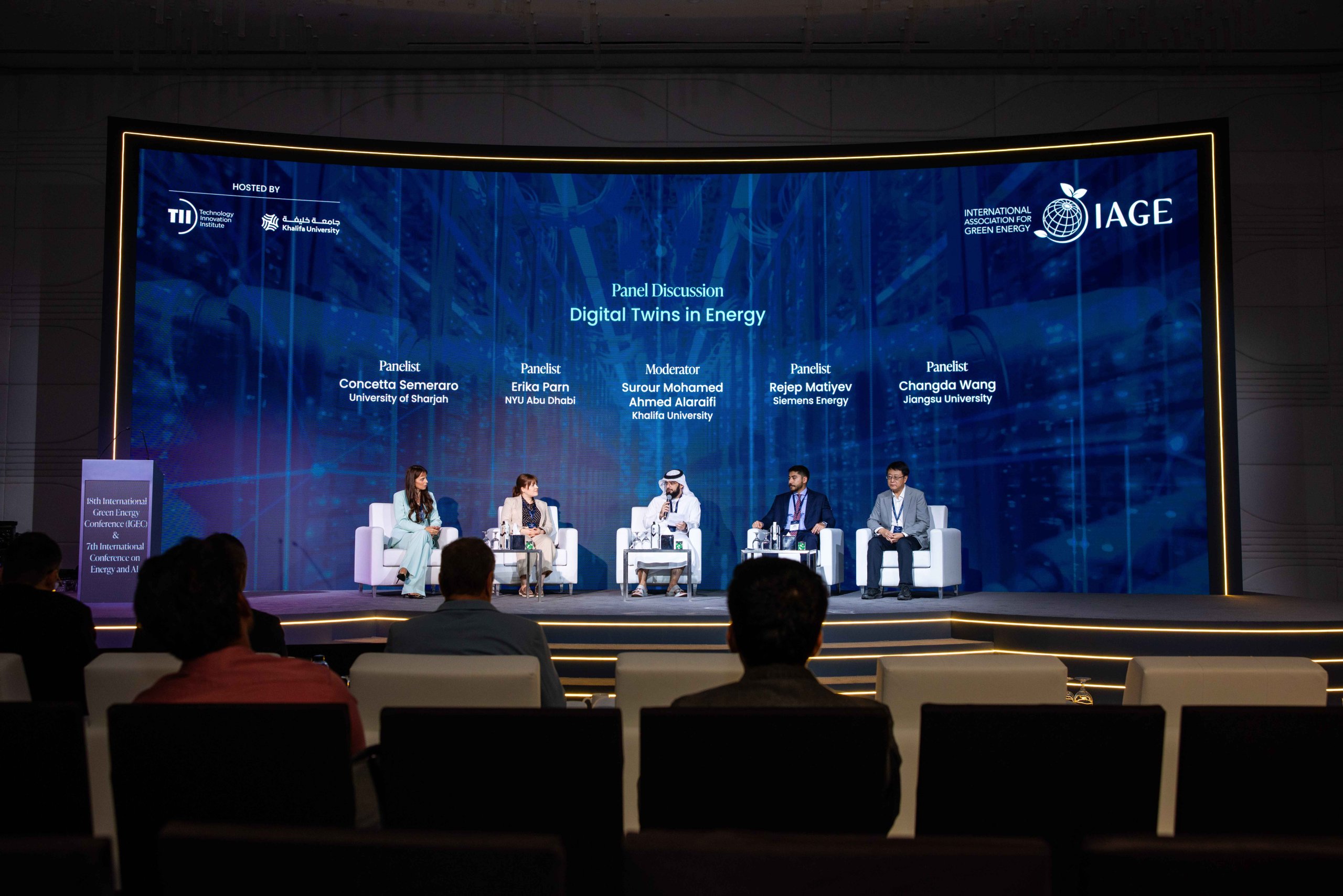
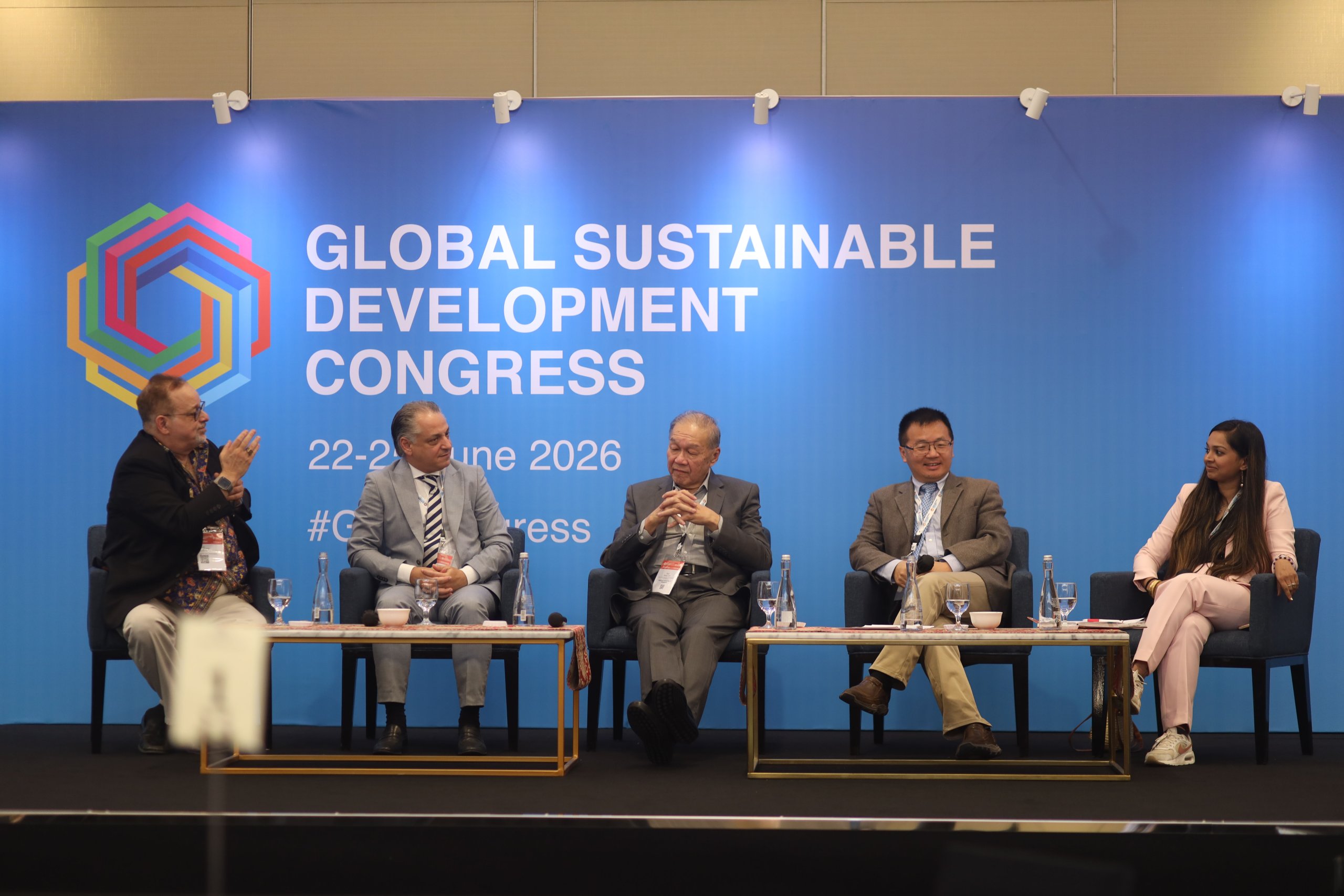
During the academia-industry panel discussion on ‘Designing Resilient Cities: Climate Adaptation Strategies for an Uncertain Future,’ Professor Mao and Professor Teck Seng Low, Senior Vice-President of Sustainability and Resilience, National University of Singapore, represented the academia and spoke about the roles of universities in climate adaptation and mitigation. Professor Mao emphasized the role of technology and policy in making cities more prepared for climate change. He discussed selected technologies for climate-resilient cities, including smart monitoring systems, artificial intelligence, climate-resilient infrastructure, and digital twins of urban environments.
Using practical examples, he illustrated that the most effective climate-resilient cities combine technological innovations with supportive governance, as the integration of technology and policy enables cities to become more resilient by improving disaster preparedness, protecting infrastructure, reducing environmental impacts, and safeguarding communities against the growing challenges of climate change.
Dr. Ashraf Al Najdawi said: “Khalifa University’s participation in the Global Sustainable Development Congress reflects its continued commitment to advancing international collaboration, supporting evidence-based solutions to global sustainability challenges, and contributing to the UAE’s climate action agenda through research, innovation, and academic leadership.”
Professor Samuel Mao said: “Khalifa University plays an important role in connecting research with practical solutions that benefit society in the UAE and across the globe. The Global Sustainable Development Congress provides an invaluable platform to exchange knowledge, strengthen partnerships, and work collectively on addressing climate challenges that no single institution or country can solve alone. By sharing expertise and learning from one another, we can accelerate meaningful progress toward a more sustainable and resilient future.”
Alisha Roy
Science Writer