Applications for the Global Energy Prize 2020 is Open

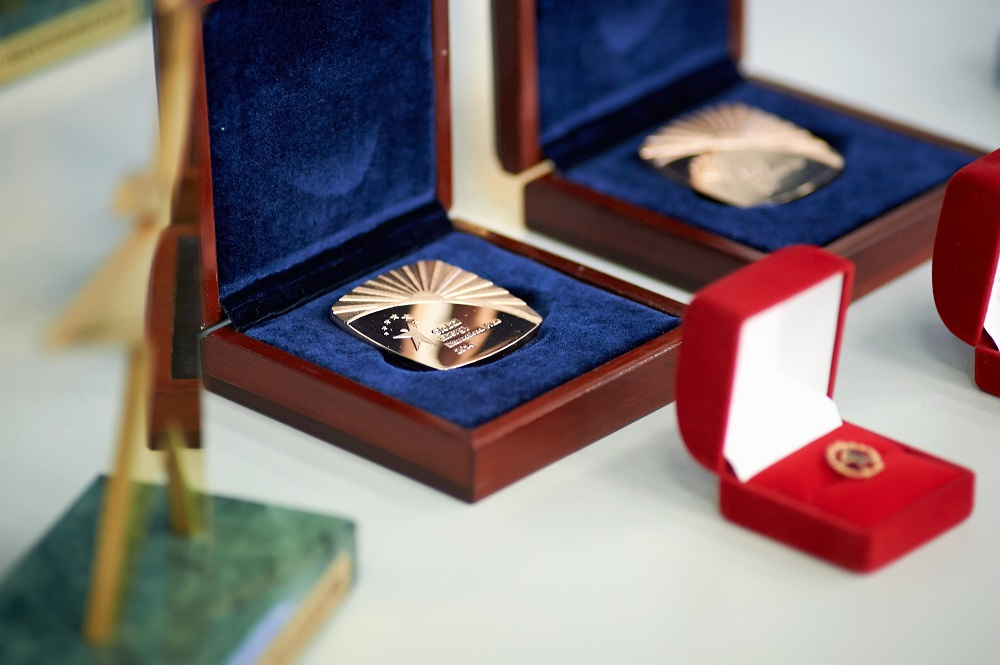
The Global Energy Association continues to accept applications for the Prize in 2020. Applications will be accepted until March 20th, 2020. Self-nomination for the Prize is not acceptable. The right to nominate candidates for the Prize is given to well-known and respected scientists. In order to learn the nomination rules, join the pool of nominees or apply, check out the official website of the organization.

Scientists from any country of the world can become Global Energy Prize laureates. The Prize awards authors of outstanding research and developments, who made discoveries and technological innovations that help solve the most acute energy problems. Since 2019, the Global Energy Prize gives awards in three categories: ‘Traditional Energy’, ‘Non-Traditional Energy’, ‘New Ways of Energy Application’.

In September 2019, Khalifa University partnered with the Global Energy Association to jointly promote the Global Energy Association award programs, which includes the Global Energy Prize.

The nomination process of the Global Energy Prize from nominating candidates to awarding laureates is exceptionally open and transparent. Self – nomination for the prize is not acceptable. The list of persons entitled to nominate for the Global Energy Prize include the following scientists: the Global Energy Prize laureates, laureates of the Nobel Prize, winners of the prizes of Kyoto, Vax Planck, Wolf, Balzan, Sheikh Zayed, Energy Globe, Goldman Environment, UNEP Sasakawa Prize, members of the Russian Academy of Sciences and of foreign academies of sciences and scientists who have been verified as nominating persons by the Global Energy Association. Additionally, energy experts can send an application to join the nomination pool. After the assessment and approval of their candidacy by the Association, they are vested with the right to nominate their candidate. The full information about the nomination process available on the Global Energy Prize website.

After determining the works admitted to the contest, the Association conducts their independent international assessment. Each work is evaluated by three experts. The work of experts is carried out according to international standards. By results of their work, experts draw up the acts of examination on the approved by the Association form. An average score is calculated for each nomination submission. On the next step, a short list is formed. The short list is usually announced to the public before the official announcement of the names of the current year’s laureates. The final decision on the laureates’ definition is made by the International Award Committee, which consists of 20 outstanding scientists from 14 countries.

The objective process of selecting the Global Energy Prize nominees was recognized at the global level. The Global Energy Prize is included in the official list of the International Congress of Distinguished Awards (ICDA). In ICDA prestige rating the Global Energy Prize is in the category of ‘Mega Awards’ for its laudable goals, exemplary practices and the overall prize fund. According to IREG Observatory on Academic Ranking and Excellence, the Global Energy Prize is one of TOP-99 international academic awards with the highest prestige and significance. It is the only award from Russia included in the IREG list. Since 2003 the prize has been presented to 39 laureates from 13 countries: Australia, Austria, Canada, Denmark, France, Iceland, Japan, Russia, Sweden, Switzerland, Ukraine, the UK, the USA.

 Contact information:
The Global Energy Association
+7 495 739 54 35, e-mail: press@ge-prize.org

 About the Global Energy Association
The Global Energy Association develops international research and projects in the field of energy. The Association operates with the support of the leading Russian energy companies PJSC “GAZPROM”, “FGC UES”, PJSC, PJSC “Surgutneftegas”. The Association manages the Global Energy Prize, organizes the eponymous summit, and implements the Global Energy Youth Program.

The Global Energy Prize is an international award for outstanding scientific research and technological development in energy. Since 2003, the Global Energy Prize has been awarded to 39 Laureates from 13 countries: Australia, Austria, Canada, Denmark, France, Iceland, Japan, Russia, Sweden, Switzerland, Ukraine, the UK and the USA. According to IREG Observatory on Academic Ranking and Excellence, the Global Energy Prize is one of TOP-99 international academic awards with the highest prestige and significance. In the prestige rating of the International Congress of Distinguished Awards (ICDA) the Global Energy Prize is in the category of “Mega Prizes” for its laudable goals, exemplary practices and the overall prize fund.


Khalifa University Receives Mohammed bin Rashid Al Maktoum Global Water Award

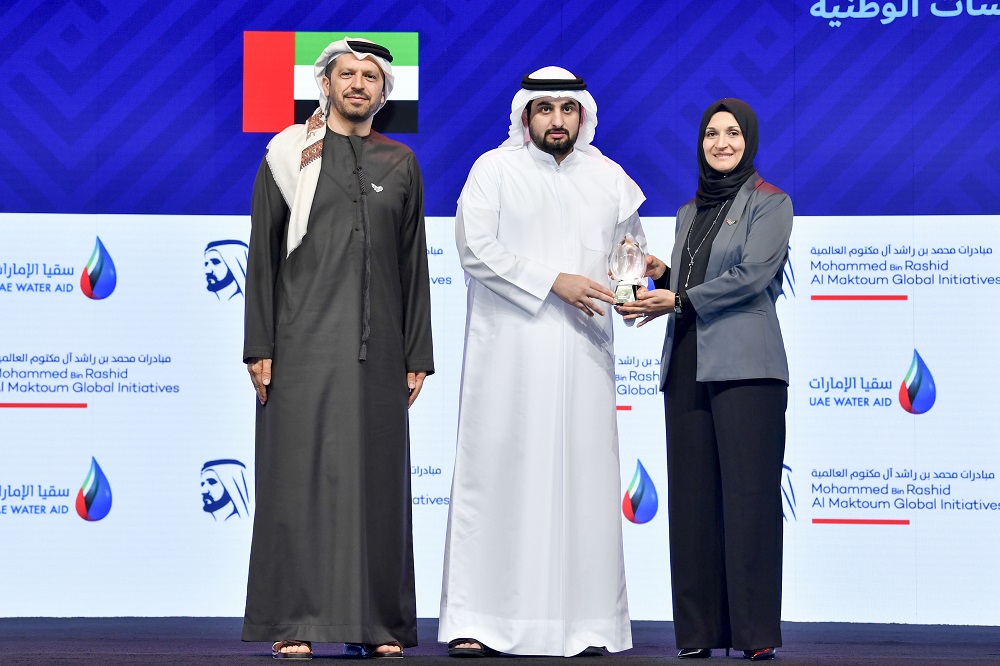
Khalifa University was awarded, for the second time, the Innovative Research & Development Award at the Mohammed bin Rashid Al Maktoum Global Water Awards ceremony held last 29 January 2020 at Madinat Jumeirah, Dubai.

The Global Water Award is an initiative of His Highness Sheikh Mohammed bin Rashid Al Maktoum, Vice President, Prime Minister and Ruler of Dubai, to encourage research institutions, individuals, and innovators, not only from the UAE but from around the world, to help solve the water shortage problem that we are experiencing worldwide. The award is given out by the UAE Water Aid Foundation (Suqia), which functions under the umbrella of the Mohammed bin Rashid Al Maktoum Global Initiatives. It has three main categories, the Innovative Projects Award, Innovative Research and Development Award, and the Innovative Individual Award.

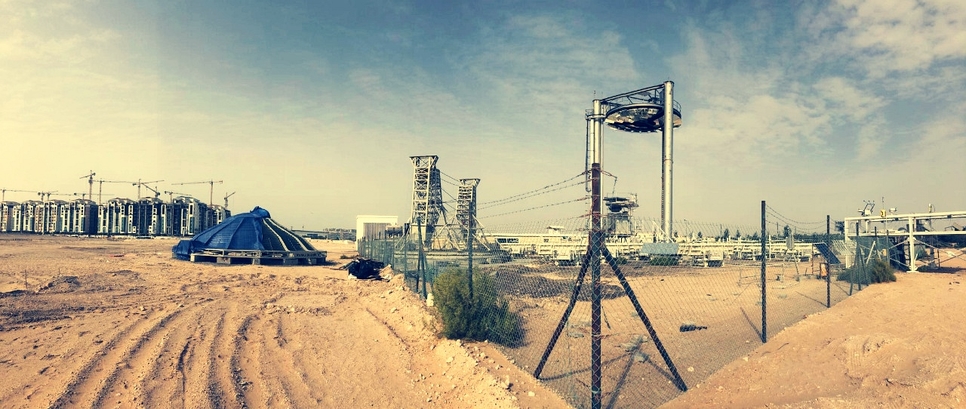
The Khalifa University research recognized was led by Dr. Banu Yildiz, Assistant Professor of Civil Infrastructure and Environmental Engineering. The project is a low-cost desalination project that uses a distiller coupled with a gravity solar water heater.

H.H. Sheikh Ahmed bin Mohammed bin Rashid Al Maktoum, Chairman of the Dubai Media Council and Chairman of the Mohammed bin Rashid Al Maktoum Knowledge Foundation, honored the 10 Global Water Award recipients. The awards ceremony was also attended by Dr. Thani bin Ahmed Al Zeyoudi, Minister of Climate Change and Environment; Saeed Mohammed Al Tayer, Chairman of the Board of Trustees of the UAE Water Aid Foundation; and Dr. Hamad bin Sheikh Ahmed Al Shaibani, Director-General of the Islamic Affairs and Charitable Activities Department in Dubai. Directors of government departments, ambassadors, consuls general, public figures, officials from the public and private sectors, and representatives from local and international universities and research centers were also in attendance.

Dr. Thani bin Ahmed Al Zeyoudi, Minister of Climate Change and Environment, said: “At Suqia, we are committed to working on one of the key objectives set by the Mohammed bin Rashid Al Maktoum Global Initiatives foundation, which is Humanitarian Aid and Relief by contributing to providing safe and clean water. In this regard, I thank the Emirates Red Crescent and the Mohammed bin Rashid Al Maktoum Humanitarian and Charity Establishment for supporting Suqia in implementing sustainable water projects in 36 countries around the world, to provide drinking water for over 9 million people.”

Ara Cruz
News Writer
8 February 2020


Is There Magnetism on Mars?

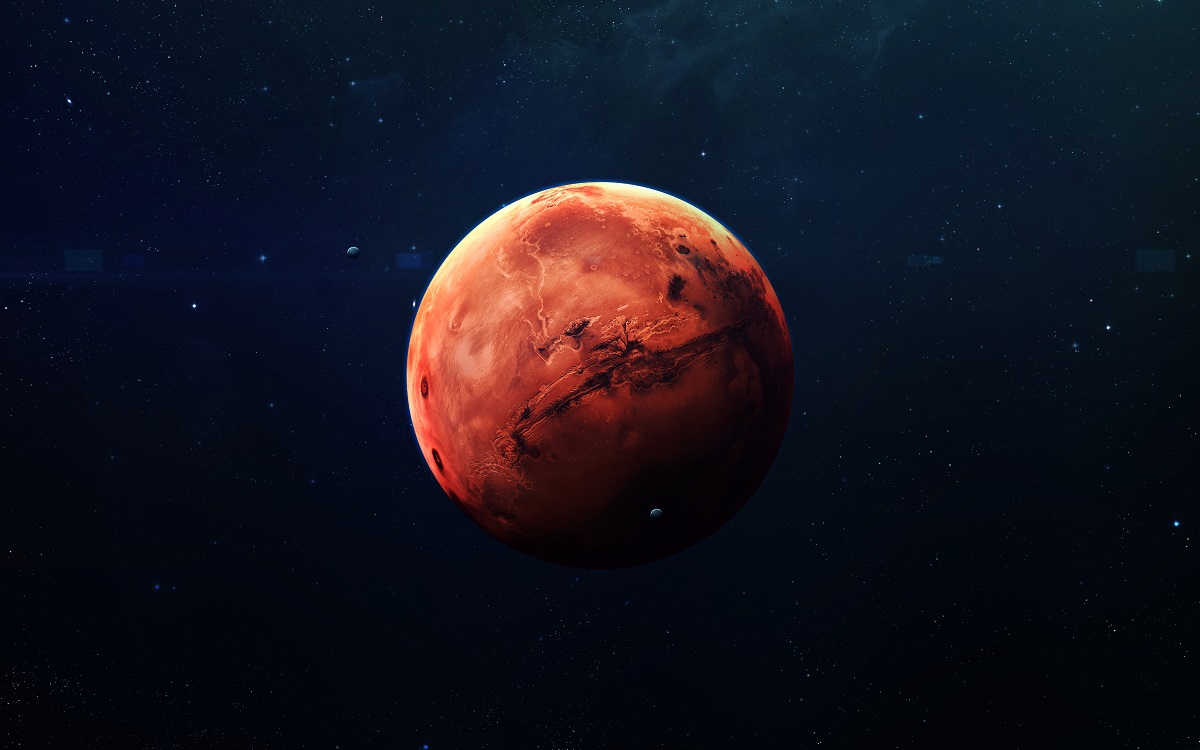
Ahmed AlHantoobi, Aerospace Engineering student, has published his research on Mars’ magnetism in the major journal Geophysical Research Letters, which he conducted during his summer experience with the Emirates Mars Mission Research Experience for Undergraduates program.


“Orbital magnetometers and the InSight lander discovered strong crustal magnetic fields in some regions of Mars, despite the lack of a detectable core dynamo,” explained AlHantoobi to a room full of respected and established researchers in their field. “This strong crustal magnetism is unexplained given that previous models of Mars’ ancient core dynamo are of approximate strength to Earth’s current field and would not produce such strong remnant magnetization if Earth-like lithologies are assumed. However, the crust on Mars is more iron-rich than Earth’s crust, which may lead to rocks with significant proportions of magnetic phases such as magnetite, hematite, pyrrhotite, and titanomagnetite.”


The lithology of a rock unit is the description of its physical characteristics to map and investigate areas by correlation between different rock types.


The dynamo theory proposes a mechanism by which a celestial body, such as Earth or Mars, generates a magnetic field, a process through which a rotating, convecting, and electrically conducting fluid can maintain a magnetic field over astronomical time scales. This conductive fluid in a geodynamo, like a planetary body, is liquid iron in the outer core, with the magnetic field induced and maintained by the convection of the liquid iron in the outer core. As the Earth rotates, the Coriolis effect supplies the rotation in the outer core, and it is this rotating fluid that induces the magnetic field.


While Mars lacks a detectable magnetic field of global scale, it boasts a rich spectrum of magnetic fields at smaller spatial scales. On average, the Mars crust is ten times more intensely magnetized than the Earth’s, and theories suggest that the Mars crust acquired this remnant magnetism from its dynamo shutting down for reasons as yet unknown.


“Previous models of Mars’ ancient core dynamo suggest that its strength was similar to that of Earth’s current magnetic field and would not produce such strong magnetic anomalies as seen,” explained AlHantoobi. “We know that Mars contains more iron than Earth when considering proportions, so the presence of very iron-rich rocks isn’t unexpected in the crust.


The Mars Global Surveyor Mission in 1996 provided a wealth of data into Mars’ evolution and the magnetic record of the crust. However, its data was collected from orbit, at great distance from the rocks containing the history of the planet’s magnetism. Until space exploration missions can use surface or aerial magnetometer surveys or even return a piece of Noachian crust (from an early time period on Mars) to Earth, researchers like AlHantoobi are using the data they already have to propose explanations for the remnant magnetism.


“The data from the magnetometer shows that there are magnetic anomalies on the Martian crust in the absence of a global magnetic field,” said AlHantoobi. “The magnetic field recorded from orbit is suggested to be a result of rocks containing magnetic minerals acquiring remnant magnetization from the time Mars presumably had a global magnetic field. The most likely cause of this remnant magnetization is thermoremanent magnetization.”


When an igneous rock, formed through the cooling and solidification of magma or lava, cools, it acquires a thermoremanent magnetization (TRM) from the Earth’s field. This remanence can be very stable and last without significant change for millions of years. If a rock is heated above its Curie temperature— the temperature above which certain materials lose their permanent magnetic properties—it can be permanently demagnetized.


“The lack of magnetic anomalies in regions with large impact basins and large shield volcanoes implies that Mars’ dynamo shut down before heavy bombardment and volcanism,” said AlHantoobi. “Magnetic minerals in regions of volcanic activities are susceptible to heat above the Curie temperature, leading to demagnetization if the global magnetic field is no longer present.”


It appears that around four billion years ago, the global magnetic field on Mars collapsed. Now, the history of its magnetic field is archived in its crust.


“We can see that in the five regions where Mars’ crustal field is particularly strong, there is a strong positive correlation coefficient between magnetic field strength and iron content,” said AlHantoobi. “It’s possible that this is due to thermoremanent magnetization of iron-rich basalt with abundant single-domain magnetic carriers such as magnetite, and therefore high magnetic susceptibility.


“This theory hasn’t been explored before. We used a model of the magnetic field created using data from the Mars Global Surveyor mission and MAVEN, and mineral maps from TES to explore the potential relationships between the magnetic field observed and the mineralogy of the Martian crust.


“A possible explanation for some of the strong crustal magnetic fields observed from orbit is local mineralogical enhancements of those regions,” explained AlHantoobi. “Therefore, Mars’ ancient core dynamo does not need to produce an extremely strong global magnetic field to explain the strong magnetic anomalies. Instead, the rocks may be much better recorders for the magnetic field than typical lithologies available on Earth.


“The methods we used rely on the presence of a recorded magnetic field, so we couldn’t comment on the crustal regions where there isn’t a recorded magnetic field. However, we can see that in both the individual and the linked correlation maps of the geologic units, there are regions with strong positive correlation, and others with a strong negative correlation. Unfortunately, the areas with the highest recorded magnetic fields comprised many small geologic units and didn’t contain enough data sets to provide us with a reliable correlation value.”


Research such as AlHantoobi’s is crucial for better understanding the universe around us and offers unprecedented access to the history of Earth’s nearest planetary neighbor. NASA’s InSight lander touched down on Mars in November 2018 to investigate the Martian crust and measure the strength and direction of the planet’s magnetic field, among many other intelligence gathering missions. Data from InSight will hopefully clarify whether the strong magnetic signal coming from the rocks beneath the lander is coming from rocks deep underground or closer to the surface. If the magnetism is coming from rocks nearer the surface, it would imply the strong magnetic field persisted around Mars for longer than currently thought.


Additionally, the Hope Mars Mission from the Emirates Mohamed Bin Rashid Space Center will study the atmospheric layers of Mars and help explain how the collapse of the planet’s global magnetic field contributed to the stripping of the atmosphere that could have sustained liquid water. Understanding the magnetic history of the red planet could help researchers determine whether there ever was any life on Mars.


Jade Sterling
News and Features Writer
28 January 2020


Khalifa University’s Project on UAE’s Values of Tolerance Showcased to Diverse Religious Leaders

Touch-Screens Developed by Students Offer Details on More Than 450 Individuals of 15 Different Faiths Buried between 1963 and 2012 at Sas Al Nakhl Non-Muslim Cemetery

Khalifa University today showcased a ‘Digital Repository for Abu Dhabi’s First Non-Muslim Cemetery’ – touch-screens offering details of those buried at the Sas Al Nakhl Non-Muslim Cemetery to various religious leaders as part of the university’s initiative to celebrate the values of tolerance in the UAE.

Religious leaders representing the Catholic, Anglican, Orthodox and other Christian churches, as well as leaders from Hindu, Sikh and Buddhist faiths attended the event during which they acknowledged the efforts behind the project. The touch-screens provide details of the deceased, buried from the early 1960s to 2012. According to available records, around 450 known individuals of 15 different faiths were buried at the cemetery between 1963 and 2012. Since the year 2012, all non-Muslim burials have been shifted to the Bani Yas Graveyard.

His Excellency Dr. Mugheer Khamis Al Khaili, Member of the Executive Council, head of the Department of Community Development, was present on the occasion.

Religious leaders who attended the event included Rev. Fr. Gandolf Wild, OFM Cap., Vice Secretary to His Excellency Bishop Paul Hinder, and Rev Fr Abishai Vase, both from St Joseph’s Cathedral – Abu Dhabi, Rev. Canon Andrew Thompson of St. Andrew’s Anglican Church – Abu Dhabi, Rev Martell Menlove from Church of Jesus Christ of Latter-day Saints – Abu Dhabi, and Rev Father Mikhail Bilmilad Hani Youssef, Coptic Orthodox Church – Al Ain.

Dr Arif Sultan Al Hammadi, Executive Vice-President, Khalifa University of Science and Technology, said: “Khalifa University is privileged to have contributed to this historic project and developed these touch-screens as part of its commitment to the values of tolerance, which demonstrates the UAE’s enduring acceptance of other religions, as directed by the country’s leadership. The cemetery project is a perfect illustration of the UAE’s diverse and inclusive culture, and the values of co-existence and peace that have been key pillars of the country, right from the beginning. Khalifa University has undertaken this initiative to preserve and promote religious harmony, an important legacy of the UAE.”

Gathered meticulously by several university students including 10 students from Khalifa University, the Sas Al Nakhl (Umm Al Nar) Non-Muslim Cemetery project was the culmination of several months of dedicated work. The project was led by Dr. Athol Yates, Assistant Professor, Humanities and Social Sciences, Khalifa University, with support from Abu Dhabi Police. The touchscreen application is designed to mimic a virtual guide to the first non-Muslim cemetery in Abu Dhabi.

Details of the individuals, extracted from death certificates, belonged to the Roman Catholic, Anglican, Armenian Apostolic, Apostolic Christian, Coptic Orthodox, Indian Orthodox, Greek Orthodox, Malankara Mar Thoma Syrian Church, Protestant, Evangelical and various Christian denominations, as well as Hindu, Buddhist, and Sikh faiths.

The touchscreen offers details of a deceased individual, such as name, religious affiliation and other information as catalogued from the death certificates. Users of the touchscreen will be able to view an aerial photograph of the cemetery showing the location of graves, as well as background information about the cemetery, statistical details and relevant information.

The touchscreen also makes it easy to access the full list of those known to have been buried at the Sas Al Nakhl Non-Muslim Cemetery, with location of individual graves and tombstones.

Clarence Michael
News Writer
27 January 2020

KU’s Quantum Computing Research to be Highlighted at International Symposium

Dr. Faisal Khan, Assistant Professor of Mathematics and a Principle Investigator in the Center for Cyber-Physical Systems (C2PS) at Khalifa University, will bring international attention to KU’s expertise in quantum computing at a mini-symposium he is organizing on Wednesday, 12 February 2020 in Seattle, Washington, USA, during the Society for Industrial and Applied Mathematics’ (SIAM) Conference on Parallel Processing for Scientific Computing.

Quantum computers can in principle be millions of times faster than conventional computers, and the current first generation of these machines can solve certain industrial optimization problems significantly faster than traditional computers. For example, in October 2019, Google’s quantum processor solved a problem in 200 seconds that a state-of the-art supercomputer would have require 10,000 years to solve.

Quantum computers are capable of such powerful, high-speed analysis and computation because unlike conventional computing, quantum computing is not limited to two bit values, 0 or 1. Rather a qubit can be 0 or 1, or have properties of both of these values simultaneously, which is called superposition.

Dr. Khan, who heads the University’s Quantum Computing Research Group, will showcase the fundamental contributions he and other KU faculty are making to the field of quantum computing; a market which is expected to exceed US$495 million by 2023, according to a report by market research analysts Markets and Markets.

His presentation, titled “Nash embedding: A roadmap to realizing quantum hardware” will describe “an approach to engineer hardware for quantum computers that – unlike current ‘synthetic’ or ‘quasi-quantum’ hardware prototypes – is robust against classical noise arising from the environment in a mathematically and physically precise way,” Dr. Khan explained. The approach is based on the work of the Noble Laureate, John Nash, in differential geometry.

The symposium participants include individuals who are at the forefront of research in the field of quantum computing and its applications to industry. They will be answering questions like: What are quantum computers (QCs) today and what will they be like in the next five to 15 years? In what mathematical models should subject-matter experts formulate their problems so applications will benefit from QCs in a sustainable way? How will subject-matter experts develop applications for QCs? What are to be considered best practices in developing and programming quantum computing architectures? And what opportunities for quasi-automatic transformation by new compiler-like tools can exploit the power of well-matched mathematical models?

By organizing a mini-symposium that will facilitate dialogue among some of the world’s leading quantum computing researchers and academics, Dr. Khan is helping to position the UAE as a reference for knowledge and innovation in quantum computing.

Erica Solomon
Senior Editor
27 January 2020

Experts from Khalifa University’s College of Medicine and Health Sciences to Discuss Key Topics at Arab Health Congress 2020

Talks to Cover Simulation in Obstetrics and Gynecology, Radiology, and Management of Mullerian Anomalies

Two experts from Khalifa University’s College of Medicine and Health Sciences will be sharing their perspectives on some of the latest developments in the medical sector during Arab Health 2020, the largest healthcare event in the Middle East.

Khalifa University is the Official Education Partner for Arab Health 2020 that is organized on 27-30 January at the Dubai World Trade Centre. At the 12th Obstetrics and Gynecology Conference that is part of the Arab Health Congress 2020, Dr. John Rock, Founding Dean of Khalifa University’s College of Medicine and Health Sciences, will talk about best practices in the management of Mullerian anomalies on 29 January.

In addition, Dr David Graham, Chair of Medical Imaging and Radiology, Associate Dean for Clinical Affairs, College of Medicine and Health Sciences, will speak about ‘Ultrasound in the age of artificial intelligence’ on 27 January and ‘Simulation in Obstetrics and Gynecology’ on 28 January, at the 20th Total Radiology Conference.

Dr. John Rock said: “As the first Abu Dhabi medical school to offer the four-year MD program in the UAE, the Khalifa University College of Medicine and Health Sciences aims to deliver world-class education, while actively involved in knowledge-sharing forums such as Arab Health Congress. We offer unparalleled expertise through our 20 academic departments, and we firmly believe participating in Arab Health will not only raise the profile of our institution among the healthcare sector stakeholders, regionally and globally, but will also help showcase the quality of medical education that is available in the UAE.”

The Khalifa University College of Medicine and Health Sciences has a state-of-the-art testing center, created with Prometric and Pearson VUE standards, that could allow Graduate Record Examinations (GRE), National Board of Medical Examiners (NBME), United States Medical Licensing Examination (USMLE) and Medical College Admission Test (MCAT) testing on site.

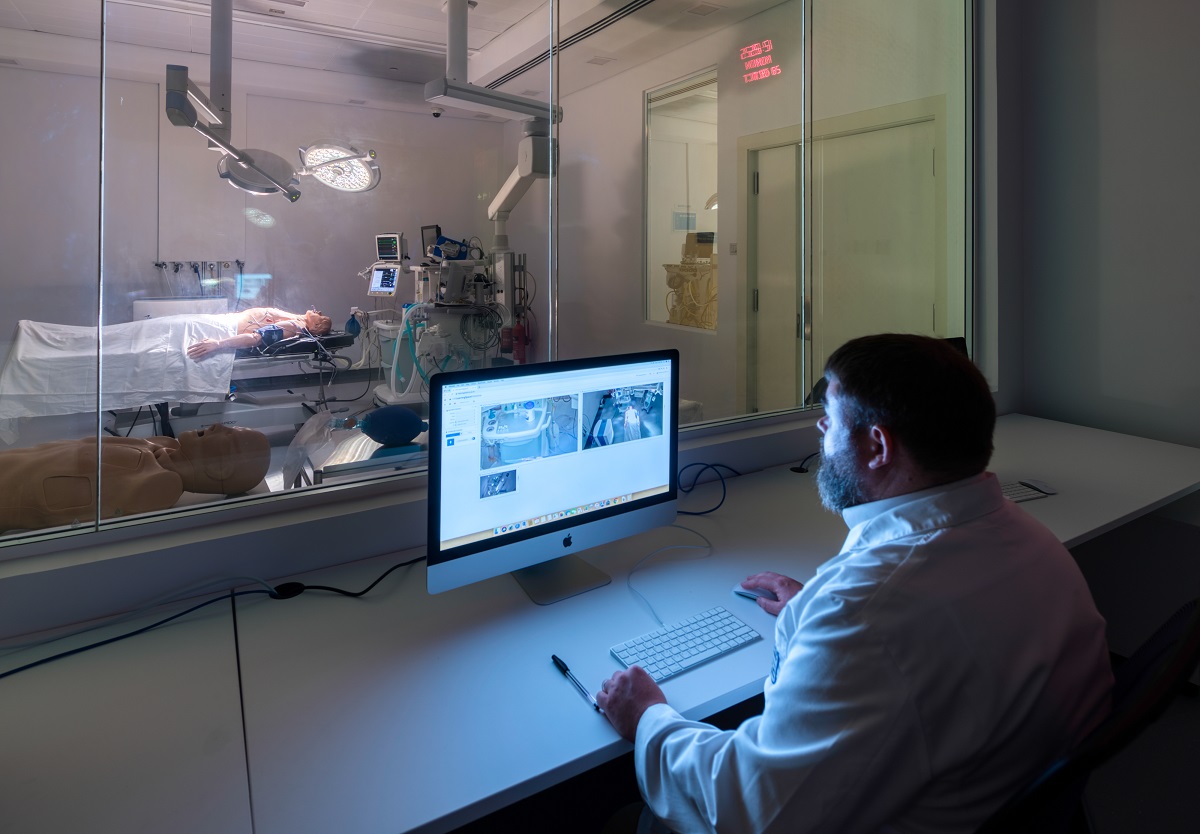
The College has also developed an OSCE (Objective Structured Clinical Examination) and Simulation Center, which is designed to test clinical skill performance. The program provides a hands-on real-world approach to learning and assessment, while serving hospital residency programs, military training units, and other medical schools in the UAE.

The College of Medicine and Health Sciences aims to expand its research portfolio in medicine and health sciences, which currently includes medical genetics, genome sciences, biomaterials for Nano medicine, cellular biomechanics, bio-robotics, tissue regeneration, and bioinformatics. The University is dedicated to graduating professionals who will contribute to the UAE’s healthcare ecosystem through employing innovative educational strategies that leverage its position as a world-class science and technology institution.

The College of Medicine and Health Sciences is the first 4X4 allopathic LCME-comparable (Liaison Committee on Medical Education), post-baccalaureate medical college, which prepares its students for residency programs in the US and Canada.

A total of 14 conferences and one educational forum covering a broad spectrum of medical specialties and disciplines are part of the Arab Health Congress 2020 that is reputed for delivering the highest quality Continuing Medical Education (CME) Conferences to medical professionals in the region.

Clarence Michael
News Writer
26 January 2020

Introducing Dr. Samuel Mao, Masdar Institute’s New Senior Director

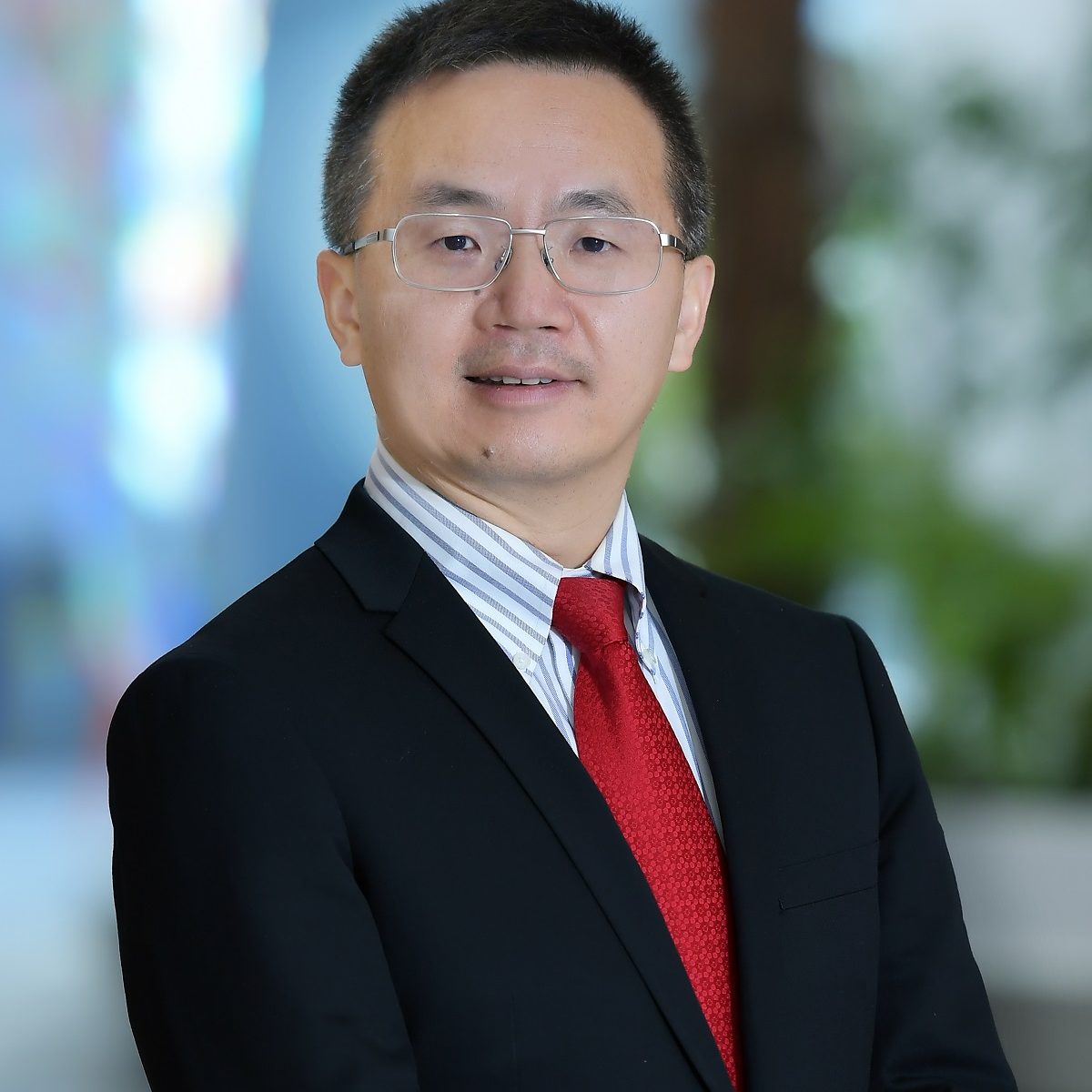
Dr. Samuel Mao joins Khalifa University as the new Senior Director of Masdar Institute to bring his extensive experience in developing cutting-edge technologies, and promoting international collaboration and global commercialization of energy and environmental technologies to the UAE.

In July, Dr. Mao delivered a lecture on KU Main Campus discussing the route from innovation to commercialization for sustainable energy technologies. He covered the research of solar-driven photocatalytic hydrogen, and the commercialization of the world’s first lithium battery-powered heavy-duty hybrid electric truck.

Dr. Mao’s ambitions for Masdar Institute and Khalifa University at large center around delivering sustainable energy technologies to industry as well as academia. His main focus is ensuring the efforts and innovations of staff and researchers at the university can be optimally commercialized.

After receiving his PhD from the University of California at Berkeley in 2000, Dr. Mao established the Institute of New Energy in Shenzhen, China, and began helping to commercialize sustainable energy technology. His background and experience over the last ten years will see him drive similar efforts at Masdar Institute and benefit the university beyond its contributions to science and academia.

Dr. Mao has published 160 research articles that have received more than 42,000 citations, and is the holder of 80 patents in the United States and abroad. In addition to co-founding three international materials and energy technology conferences, he also speaks globally and serves as a technical committee member, program review panelist, grant proposal evaluator, and national laboratory observer for the US Department of Energy.

Jade Sterling
News and Features Writer
26 January 2020

32 Teams to Vie for Honors at US$5-Million Mohamed Bin Zayed International Robotics Challenge 2020 from 23-25 February at ADNEC

Teams Representing Europe, North America, Asia, Australia and UAE to Compete in Four Iconic UAV and UGV-Related Challenges

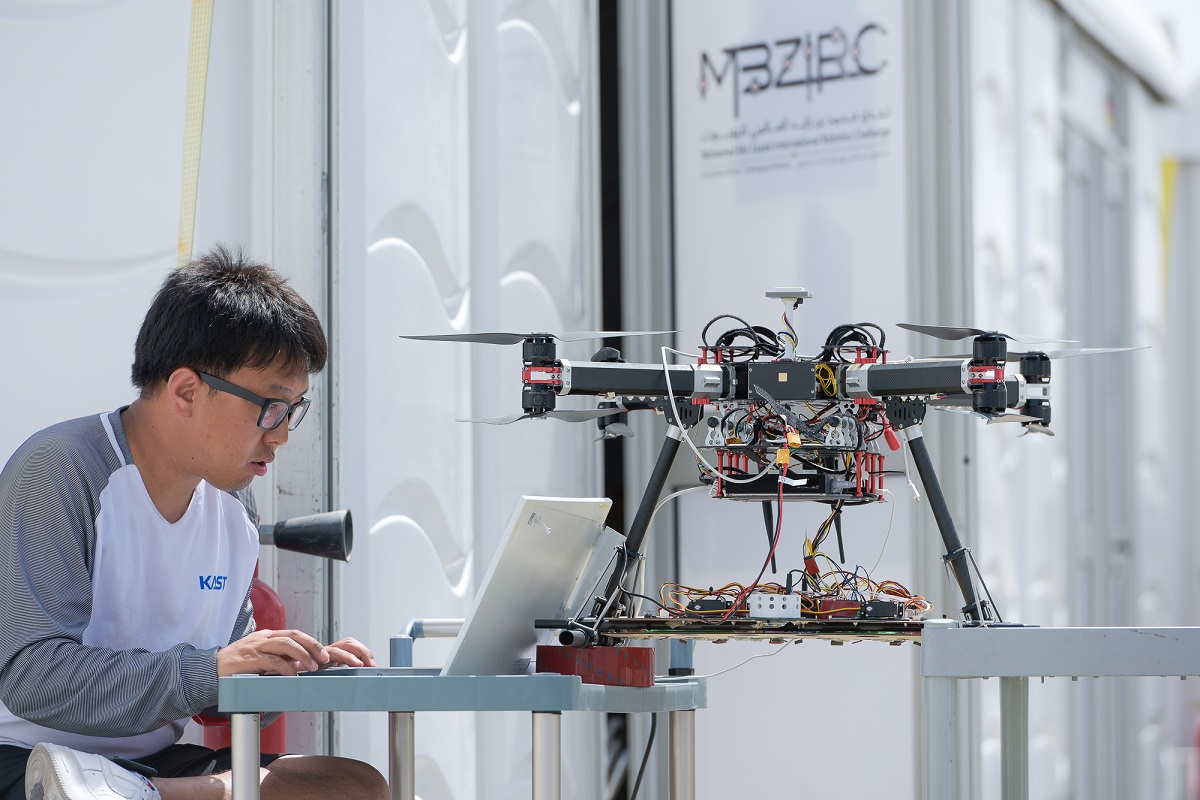
Khalifa University of Science and Technology, organizers of the Mohamed Bin Zayed International Robotics Challenge (MBZIRC), has announced a total of 32 teams will be competing for honors at MBZIRC 2020, the second edition of the US$5-million biennial international robotics competition that will be held from 23-25 February in Abu Dhabi, in parallel with the Unmanned System Exhibition (UMEX) and Simulation & Training (SIMTEX) 2020.

Around 500 top robotics experts from 32 international teams from Europe, North America, Asia, Australia and the UAE are preparing for the final leg of MBZIRC 2020 in which they will compete in four iconic robotics challenges that will test advanced embodied AI technical skills. The competition, to be held at the Abu Dhabi National Exhibition Center (ADNEC), will include three challenges and a triathlon type Grand Challenge. MBZIRC 2020 will be co-located with the 4th edition of Unmanned System Exhibition (UMEX) and the Simulation and Training Exhibition and Conference (SimTEX) at ADNEC.

Dr Arif Sultan Al Hammadi, Executive Vice-President, Khalifa University of Science and Technology, said: “Building on the success of the inaugural edition of MBZIRC held in 2017, the second edition of MBZIRC, one of the leading global robotics competitions, will bring a total of 32 teams to the UAE to display their advanced innovations in some key robotics technologies. These finalists represent top internationally-renowned academic and research institutions with well-established robotics labs. With such top league participants, we firmly believe MBZIRC 2020 will showcase the creative best in robotics and stand testimony to its reputation as a leading global robotics competition.”

MBZIRC consists of three individual challenges and a grand challenge. Challenge 1 will focus on drone safety, testing whether a team of unmanned aerial vehicles (UAVs) can autonomously track, capture and neutralize intruder UAVs.

Focused on construction automation and robot-based 3D printing of large structures, Challenge 2 will test how a team of UAVs and an unmanned ground vehicle (UGV) can collaborate to autonomously locate, pick, transport and assemble different types of brick-shaped objects to build pre-defined structures, in an outdoor environment.

Motivated by the use of robots for urban firefighting, Challenge 3 will assess how a team of UAVs and a UGV will collaborate to autonomously extinguish a series of simulated fires in an urban high rise building. The Grand Challenge requires a team of robots (UAVs and UGVs) to compete in a triathlon type event, combining Challenges 1, 2 and 3.

These challenges will require participating teams to display their skills and technical advances in fast autonomous navigation in semi-structured, complex, and dynamic environments, with reduced visibility (smoke or hazy conditions) and minimal prior knowledge. They will also be challenged in robust perception and tracking dynamic objects in 3D, sensing and avoiding obstacles, GPS-denied navigation in indoor-outdoor environments, physical interactions, complex mobile manipulations, and air-surface collaboration.

Clarence Michael
News Writer
21 January 2020

Khalifa University Receives AMEE Membership

Continuing to position itself as a premier medical university in the UAE, the College of Medicine and Health Sciences is proud to announce that Khalifa University is now an institution member of the Association of Medical Education in Europe (AMEE).

The AMEE supports institutions in developing new approaches to curriculum planning, teaching and learning methods, assessment techniques, and educational management, to keep up-to-date with advances in medicine, changes in healthcare delivery and patient demands, and new educational approaches in the study of medicine.

As a member, Khalifa University will be able to take full advantage of AMEE’s global network to share ideas, collaborate, and keep abreast with current developments in education of healthcare professions.

The AMEE is an international organization with members in 90 countries across five continents. It is the European regional association of the World Federation for Medical Education (WFME) and is a member of the WFME Executive Council.

Ara Cruz
News Writer
22 January 2020

Novel Multifunctional Metamaterials Developed at KU Investigated for Biomedical Applications

In a landmark review paper published in Advanced Engineering Materials, Dr. Rashid Abu Al-Rub, Acting Chair of Aerospace Engineering, Professor of Mechanical Engineering, and Director of the Advanced Digital and Additive Manufacturing (ADAM) Group at Khalifa University, and Dr. Oraib Al-Ketan, Post-doctoral Fellow in the ADAM Group, who recently moved to New York University Abu Dhabi (NYUAD) as a Research Scientist, have reviewed the state-of-the-art in the design, additive manufacturing, and multi-functional properties of novel types of architected metamaterials. These architected metamaterials have opened the door for more research and technological applications thanks to recent advances in digital design and additive manufacturing (so-called 3D printing).


The ADAM Group is the first R&D and educational additive manufacturing (AM) group in the region focusing on advancing state-of-the-art in AM. It provides R&D services to industries across the UAE and abroad, ensuring that the UAE remains at the forefront of AM and its application in Industry 4.0.


These architected metamaterials, which are based on mathematically-designed triply periodic minimal surfaces (TPMS), were recently lauded in Lux Research as one of the most important innovations of 2019 for their use in desalination techniques developed by KU researchers under the leadership of Professor Hassan Arafat, Director of the KU Center for Membrane and Advanced Water Technology. In fact, TPMS have been mathematically discovered more than 160 years ago, but thanks to recent advances in 3D printing they have become a reality only recently.


Now, the researchers are focusing on designing scaffolds made of the novel material for tissue engineering and bone growth. Their research is described in a paper recently published in the Journal of the Mechanical Behavior of Biomedical Materials. This work has also been done by Dr. Dong-Wook Lee, a Research Scientist in the ADAM group, and in collaboration with Dr. Reza Rowshan, Executive Director of Core Technology Platforms Operations at NYUAD, to print the scaffolds using the metallic 3D printer available at NYUAD’s Core Technology Platforms facility.


Technology is often directly or indirectly inspired by nature, with recent studies showing many biological organisms exhibit spectacular surface topography such as shape, size, and spatial organization to allow them to adapt dynamically to a wide range of environments. Topology is the study of geometrical properties and spatial relations unaffected by the continuous change of shape or size of figures. In a broader sense, these topological features seen in biological systems can change the way engineers understand surfaces and their applications in a wide range of sectors.


“The distinctive topology-driven multi-functionalities of nature’s biological systems have motivated the materials science research community to design and synthesize materials for different engineering disciplines,” explained Dr. Abu Al-Rub. “As such, cellular materials with a wide range of topological features, length scales, and structurally controlled characteristics that include high stiffness-to-weight ratio, heat dissipation control, and enhanced mechanical energy absorption have been designed for different applications, including in the biomedical sector.”


There are many biomedical applications in which an understanding of natural topography can lead to improved material designs. One such application is in tissue engineering and bone growth. According to evolutionary theory, organisms use the least materials to achieve the best performance and optimize surface topological characteristics such as geometry, density, and spatial organization. This results in sophisticated multiscale structures which offer versatile functionalities and characteristics.


Bone scaffold tissue engineering is a rapidly advancing technology, thanks in large part to the advent of additive manufacturing, or 3D printing. An ideal bone graft or scaffold should be made of biomaterials that mimic the structure and properties of natural bones. Bone comprises an open cell composite material, but its mechanical properties vary with anatomical location and the loading direction. Therefore, a biomaterial that can be changed to suit differing requirements is highly sought after.


“In biomedical applications, a large mismatch between the bone and the implant leads to stress shielding due to the uneven stress distribution at the bone-implant boundary,” explained Dr. Abu Al-Rub. “As such, cellular materials are used to tailor the properties of the implant and avoid bone resorption around the implant.”


Functionally graded and multi-morphology porous lattices are one such material of interest because of the ability to control their physical, mechanical and geometrical properties spatially. Dr. Abu Al-Rub and his team investigated the relative density grading, cell size grading and multi-morphology (lattice type grading) for sheet-based lattices with topologies based on triply periodic minimal surfaces (TPMS).


A minimal surface is a surface that is locally area-minimizing­—a small piece has the smallest possible area for a surface spanning the boundary of that piece. Minimal surfaces necessarily have zero mean curvature; the sum of the principal curvatures at each point is zero. Minimal surfaces that have a crystalline structure, repeating themselves in three dimensions, are triply periodic.


“In principle, TPMS are smooth and continuous surfaces that can be described mathematically,” explained Dr. Abu Al-Rub. “These surfaces have fascinating and distinctive geometrical characteristics, for instance, a minimal surface is smooth in nature, has no sharp edges or corners, and splits the space into two or more nonintersecting, intertwined, and infinite domains that can be repeated periodically in three perpendicular directions.”


Lattices are regular, 3-dimensional, repeating structures, seen in nature as honeycombs and bones. While traditional manufacturing techniques have historically limited the ability to produce complex porous lattice structures, additive manufacturing has broadened the horizon of applications for lattice-based materials.


“Lattices are an attractive subclass of cellular materials and are widely used in the design of scaffolds and body implants,” explained Prof. Abu Al-Rub. “Advancements in fabrication techniques, specifically in additive manufacturing, facilitated their fabrication with lattices increasingly employed in biomaterials.”


Certain applications may require altering the lattice material’s volume, surface area, or pore size, depending on the intended functionality. This is known as functional grading. The ability to control unit cell size, unit cell type, and unit cell porosity can help better tailor the lattice material to meet the necessary engineering requirements.


“Functional grading is particularly important when the mechanical, physical and geometrical properties need to be tailored specifically to meet both biological, mechanical or thermal requirements concurrently,” explained Dr. Abu Al-Rub. “One example is bone implants, which are required to imitate the spatial distribution of mechanical and biological properties of natural bone. The implant should be highly porous in the middle section to allow for bone cell migration and proliferation, while the outer section needs to be highly dense to provide the desired mechanical properties.”


Trabecular bone is the porous bone tissue found at the ends of long bones like the femur, where the bone is not solid but rather full of holes connected by thin rods and plates of bone tissue. Even though it is porous, its spatial complexity contributes the maximal strength with minimum mass as it is optimized to resist loads imposed by functional activities such as running and jumping. To design the optimal bone-implant system, the mechanical properties of trabecular bone must also be understood.


“It was found that tissue regeneration progresses faster with curved surfaces as opposed to flat surfaces,” said Dr. Abu Al-Rub. “TPMS topologies exhibit mean curvatures equal to zero which resembles the mean curvature of trabecular bones.”


Previous work, covered by Dr. Abu Al-Rub and Dr. Al-Ketan in their research paper, investigated the relationship between grading approaches and the resultant mechanical and physical properties of the material. TPMS-based lattices can be categorized into solid-networks and sheet-networks depending on their scaffold architectures.


“Remarkably, the deformation behavior and mechanical properties of functionally graded and multi-morphology sheet-networks lattices have not been explored much,” said Dr. Abu Al-Rub. “We found that the deformation behavior exhibited by these lattices is very different from that observed in solid-networks or strut-based multi-morphology lattices.”


Further research into these differences will lead to improved lattice structure design for superior biomedical performance, while continued developments in additive design and manufacturing can be harnessed to integrate these complex designs into modern implants and improve clinical outcomes. Furthermore, Dr. Abu Al-Rub and his team are currently exploring other engineering applications of the developed functionally-graded TPMS metamaterials such as heat sinks and heat exchangers for thermal management, ultra-lightweight sandwich panels for aerospace structures, vibration absorbers for spacecraft systems, and catalytic supports for oil & gas industry.


Jade Sterling
News and Features Writer
21 January 2020

 

Young Future Energy Leaders Shaping the Energy Landscape Among Climate Concerns

In an uncertain future energy landscape, becoming sustainable requires transformation at every level. It implies not only switching fossil fuels to renewable energy, but also a whole raft of social, political and economic changes on a global scale. Enter the new generation of leaders who will pave the way for this long-term energy transformation.

The Young Future Energy Leaders program is one of the most dynamic platforms in the UAE for fostering tomorrow’s leaders. Aiming to educate, inspire and position students and young professionals to become future leaders capable of solving the world’s most pressing challenges in advanced energy and sustainability, the YFEL program comprises a year-long schedule of courses and overseas visits.

Energy systems are increasingly complex and the UAE’s future scientists, engineers and innovators need the knowledge and technology to build a sustainable energy future. This knowledge includes courses on trends and future energy sustainability as well as technology, policy and leadership. Graduates leave the program with a mix of the education and soft skills needed to lead the world into a more sustainable future.

The YFEL program offers young professionals and students from the UAE and abroad the opportunity to become more engaged in finding solutions to the world’s biggest challenges: achieving energy efficiency and tackling climate change.

Most energy supply and demand outlooks to 2050 suggest that growing global energy demand will continue to be met largely by fossil energy sources, however calls to refrain from further investing in hydrocarbon projects due to environmental concerns are becoming increasingly prevalent. The program’s geographical base in the Middle East is therefore particularly relevant.

The energy sector is under huge pressure from climate change. A challenge for all of humanity, climate change needs to be addressed jointly and calls for changing the energy mix from the traditional hydrocarbons dominating the region towards low-emission sources, such as sun, hydroelectricity, and nuclear power. The United Arab Emirates is investing heavily in all alternative forms of energy – it has set an ambitious target to generate 50 percent of its energy from clean and renewable sources by 2050 – with this research highlighted in the YFEL courses.

Future energy leaders need to balance the de-carbonization of our energy supply with the need to provide the world with affordable, reliable and modern energy, as per the United Nation’s Sustainable Development Goals.

Humanity needs to work together and enhance international cooperation. The YFEL program facilitates access to clean energy research and technology, including renewable energy, energy efficiency and advanced and cleaner fossil-fuel technology, with graduates promoting investment in energy infrastructure and clean energy technology.
Reaching a sustainable future requires thinking of the short-term as well as the long-term. The Middle East’s significant natural resource supplies need to be carefully considered to be best utilized in the evolving energy landscape—for example, using hydrocarbon energy to fill the gaps in renewable supply or prioritizing their availability for export and national industry. Fossil fuels will remain part of the future energy mix but their share in the future landscape must be reduced considerably to achieve sustainability goals.

Technology to generate clean energy from hydrocarbon fuels without harmful emissions, such as the Allam Cycle, need to be prioritized as the world is led into the future.

In the long-term, leadership and vision are in high demand. The inertia of government, the long operating life of investments in the energy sector and energy security issues are commonly considered the main obstacles preventing the transition needed in this area. The world needs leaders to drive the substantial change in attitude and behavior required to achieving global sustainability. To that end, the leadership, policy and business acumen imparted to the YFEL graduates will see them drive the commitments from state and non-state actors alike.

This is a challenging prospect, one for which these future leaders are extensively prepared. Long-term energy transformation needs more than the technologies already in use or in development—the plans laid today need to consider even more innovative and visionary technologies that don’t exist yet. The so-called sustainable development trilemma looms: currently, providing energy security, energy equity and environmental sustainability simultaneously simply isn’t possible. A highly secure and environmentally-friendly energy supply would mean prohibitively high costs preventing equal access. But an accessible and secure energy supply for everyone the world over cannot be achieved without using fossil fuels, contributing to the environmental damage that has led us to climate change.

New technologies may make this possible but it takes visionaries to plan for these.

With the stage set from their successful completion of the YFEL program, the energy leaders of tomorrow are ready to change the world.

Jade Sterling
News and Features Writer
15 January 2020